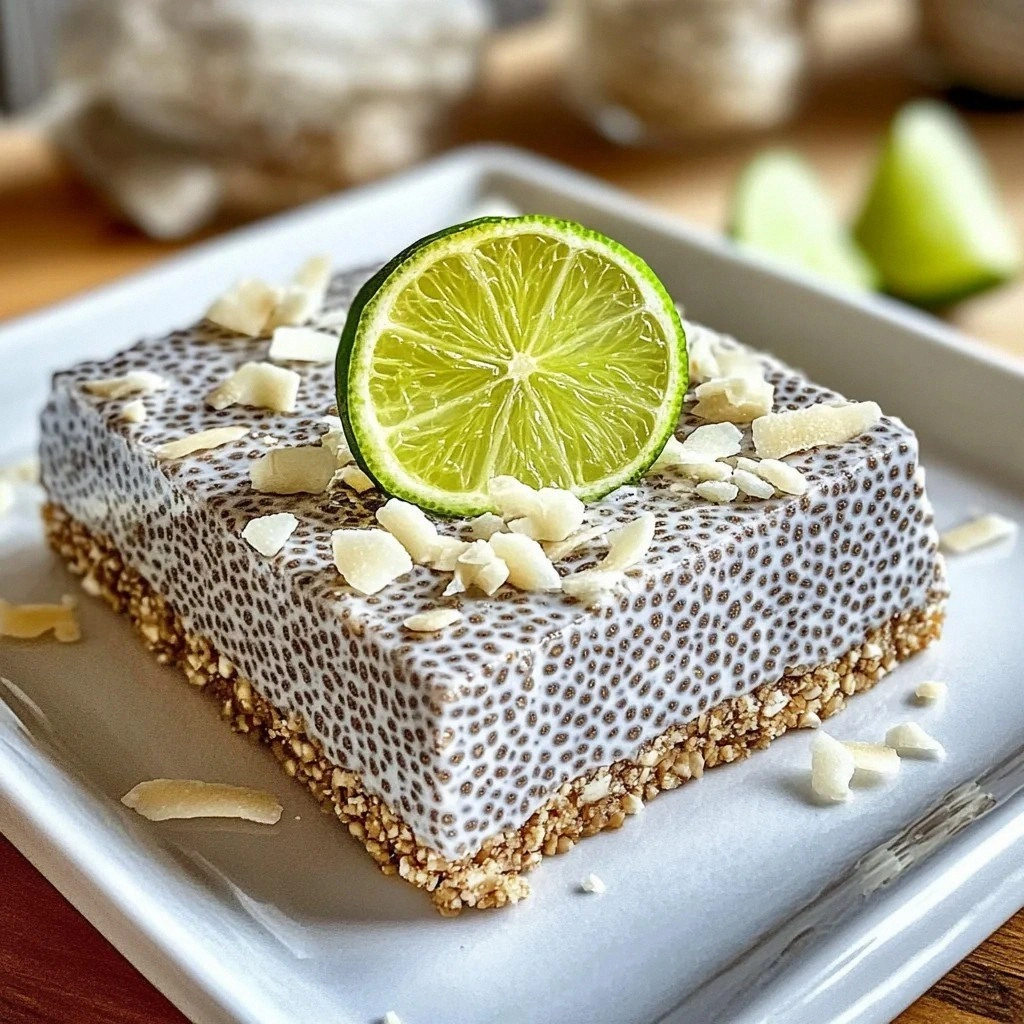
Last Tuesday at 3:47 p.m. I was elbow-deep in a failed batch of baked cheesecake bars that had cracked, wept, and somehow managed to taste both rubbery and soggy at the same time. The humidity was doing things to my kitchen that would make a baker weep, and the air-conditioner had given up the ghost two days prior. In the middle of this culinary disaster, my best friend texted: "I need a dessert that tastes like a tropical vacation but doesn't require me to turn on the oven, move mountains, or possess the patience of a Tibetan monk." Challenge accepted. What emerged from that sticky, sweaty afternoon was these Refreshing No-Bake Chia Pudding Bars with Zesty Coconut Lime Flavor — a dessert so cool and bright it practically hums with vacation vibes.
Picture this: a buttery, crumbly crust that melts on your tongue like sandy beaches under bare feet, topped with a cloud-soft layer of coconut-lime chia pudding that shivers and wiggles like a happy puppy when you jiggle the pan. The first bite hits you with zingy lime that snaps you awake, then the mellow creaminess of coconut slides in to soothe, while tiny chia seeds pop between your teeth like the world's tiniest caviar. I dare you to taste this and not go back for seconds. Actually, I double-dog dare you, because I ate half the batch before anyone else got to try it and I'm not even sorry.
Most no-bake bars are cloying sugar bombs that sit in your stomach like a brick. Most chia puddings are boring health-food mush that tastes like regret and cardboard. This recipe? This is the sweet spot where health meets hedonism, where the texture is so silky-smooth you'll swear there's heavy cream hiding in there (spoiler: there isn't), where the flavor is so bright and balanced it makes your taste buds do a happy dance. The secret isn't some fancy ingredient you have to mortgage your house for — it's in the technique, the timing, and one unexpected ingredient that you'll never guess until I tell you.
Stay with me here — this is worth it. By the time we're done, you'll have a dessert that slices into perfect, photo-worthy squares, keeps for days in the fridge, tastes like summer had a baby with a spa day, and requires exactly zero oven time. Let me walk you through every single step — by the end, you'll wonder how you ever made it any other way.
What Makes This Version Stand Out
Lightning-Fast Assembly: From pantry to pan, you're looking at twelve minutes of active work. That's less time than it takes to scroll through social media while pretending to work. The magic happens in the fridge while you binge-watch your favorite show, chase toddlers, or contemplate the meaning of life.
Texture That Defies Physics: These bars manage to be both cloud-light and satisfyingly substantial. The chia seeds create a natural gel that sets the pudding without gelatin, while the crust provides that essential crunch that keeps each bite interesting. It's like eating a tropical cloud that's been to the gym.
Flavor That Punches Above Its Weight: We're using the entire lime — zest, juice, and a secret trick with the oils in the skin — to create a citrus explosion that tastes like you squeezed a thousand limes into one square inch. The coconut doesn't just whisper; it sings harmony with the lime in perfect pitch.
Make-Ahead Champion: These bars actually improve over 24 hours as the flavors meld and deepen. Make them Sunday, serve them Friday, and they'll taste even better. Try that with your fussy mousse cake and get back to me.
Crowd Psychology Magic: Serve these at a party and watch grown adults turn into competitive vultures. I've seen polite company devolve into fork-dueling over the last piece. The combination of "healthy" ingredients and indulgent taste creates a guilt-free feeding frenzy.
Pantry Staple Friendly: Everything in this recipe lives happily in your cupboard or freezer, ready to spring into action when dessert emergencies strike. No specialty stores, no $20 extracts, no obscure superfoods that taste like lawn clippings.
Customizable Canvas: Once you master the base, you can swap in mango, passionfruit, or even espresso powder. This recipe is a playground for your imagination, and I've never met a variation I didn't like.
Alright, let's break down exactly what goes into this masterpiece...
Inside the Ingredient List
The Flavor Base
Full-fat coconut milk is the velvet curtain upon which our flavor drama unfolds. Don't you dare reach for that watery light stuff — we need the richness to carry the lime and create that luxurious mouthfeel that makes people close their eyes when they taste it. The fat content also helps the pudding set properly; skim coconut milk will give you a sad, sloppy mess that weeps like a disappointed parent. If you're allergic to coconut, you can substitute with oat milk plus two tablespoons of melted cocoa butter, but honestly, it won't be the same tropical vacation in your mouth.
Fresh limes are non-negotiable. Bottled lime juice tastes like battery acid had a baby with sadness. You need two plump, heavy limes that feel like small water balloons when you squeeze them gently. The zest is where the magic lives — those tiny green flecks contain lime oils that make the flavor bloom and linger like a pleasant memory. Pick limes with smooth, glossy skin; wrinkled ones are dried out and will leave you with a flat, one-dimensional flavor that tastes like lime's disappointing cousin.
The Texture Crew
Chia seeds are the original superfood magicians. When soaked, they transform into tiny tapioca-like pearls that create a natural gel, giving our bars that perfect jiggle without any weird animal products or chemical thickeners. Black chia seeds look dramatic against the white coconut, but white chia seeds disappear completely if you're feeding suspicious children who claim to hate "weird specks." Buy them in bulk — they're cheaper than therapy and last longer than most relationships.
Medjool dates form the sticky backbone of our crust. These caramel-sweet gems bind everything together while adding depth and complexity that white sugar could never achieve. Make sure they're soft and glossy; if they feel like tiny rocks, soak them in hot water for ten minutes and they'll plump right up. In a pinch, you can use dried figs, but they'll add a honey-like note that competes with the lime instead of complementing it.
The Unexpected Star
A pinch of sea salt might seem counterintuitive in a dessert, but it's the difference between a flat, sweet blob and a flavor that makes your eyebrows shoot up in surprise. Salt amplifies the coconut's natural sweetness and makes the lime taste brighter — it's like turning up the contrast on a photo. Don't skip this; I once forgot it and the result tasted like sugary disappointment.
Vanilla extract rounds out the sharp edges of lime and coconut, creating a harmonious blend that tastes sophisticated rather than like a pina colada gone wrong. Use the good stuff — artificial vanilla tastes like a candle factory exploded in your mouth. If you're feeling fancy, scrape a real vanilla bean instead; those tiny black specks make people think you're a pastry wizard.
The Final Flourish
Toasted coconut flakes for garnish add visual drama and a nutty crunch that makes the top layer as interesting as the pudding below. Toast them yourself — the store-bought ones taste like cardboard that's been left in a musty basement. Just shake them in a dry pan for three minutes until they smell like vacation and turn golden brown around the edges.
Everything's prepped? Good. Let's get into the real action...
The Method — Step by Step
- Prep your pan like a pro. Line an 8x8 pan with parchment paper, leaving wings hanging over two opposite sides — these become your handles for lifting out perfect squares later. Don't use foil; it tears and leaves weird metallic flavors. If you only have a 9x9 pan, reduce the chilling time by an hour since the layer will be thinner. Smooth the parchment into the corners with the back of a spoon; wrinkles in your parchment become wrinkles in your dessert, and we're going for magazine-worthy here.
- Create the crust that dreams are made of. Blitz your dates in a food processor until they form a sticky paste that looks like homemade playdough. Add the almonds and pulse until you have a rubble that holds together when squeezed — it should feel like damp sand at the beach that's perfect for building castles. If it's too crumbly, add another date; too sticky, add more nuts. Press this mixture firmly into the bottom of your pan using the bottom of a measuring cup; compact it like you're trying to win a compaction contest. This isn't the time for gentle — really lean into it so you get a solid base that won't crumble when you bite into it.
- Toast your coconut to golden perfection. While your crust chills, spread coconut flakes in a single layer in a dry skillet. Turn the heat to medium and shake the pan like you're panning for gold. The moment they start to smell like a tropical paradise and turn golden at the edges, yank them off the heat — they go from perfect to burnt faster than you can say "chia pudding." Pour them onto a plate immediately so they don't keep cooking from residual heat. Burnt coconut tastes like disappointment and regret.
- Mix the pudding base with confidence. In a large bowl, whisk together coconut milk, lime juice, zest, maple syrup, vanilla, and salt until it looks like a smooth, pale green dream. The mixture will seem thin — that's perfect. Now here's the game-changer: sprinkle the chia seeds across the surface like you're feeding birds, then whisk gently. This prevents clumps that turn into weird jelly blobs. Let it sit for five minutes, then whisk again. This second whisk is crucial; it redistributes the seeds so they hydrate evenly instead of forming a gross chia brick at the bottom.
- Pour and level like you mean it. Gently pour the pudding over your crust, using a spatula to coax it into the corners without disturbing the base. Give the pan a little shimmy — that gentle wiggle helps the pudding settle and releases any air bubbles that might create weird holes. The surface should look as smooth as a mirror. If it's lumpy, tap the pan on the counter a few times; the vibrations work like magic.
- Chill until set, then chill some more. Cover with plastic wrap (press it right onto the surface to prevent skin formation) and refrigerate for at least four hours, preferably overnight. This isn't a suggestion — under-chilled chia pudding has the texture of thick soup and will ooze everywhere when you try to cut it. The seeds need time to work their gel magic. If you're impatient, pop it in the freezer for the first hour, then move to the fridge. But don't freeze it solid or you'll need a chisel.
- Slice with surgeon precision. Remove from fridge, lift out using the parchment wings, and place on a cutting board. Dip a sharp knife in hot water, wipe dry, then slice in one confident motion. Clean the knife between cuts for Instagram-worthy edges. If the pudding sticks, the bars need more chilling time — wrap them back up and try again in an hour. Don't saw back and forth; that's how you get ragged edges that look like they were attacked by a bear.
- Garnish like you planned it all along. Just before serving, sprinkle those gorgeous toasted coconut flakes in a diagonal pattern across the top. Add a few extra lime zest strands for color contrast. Serve cold — these taste best when they're refreshingly chilly, not room temperature. If it's a hot day, serve them on chilled plates so they don't start melting before your guests can appreciate your masterpiece.
That's it — you did it. But hold on, I've got a few more tricks that'll take this to another level...
Insider Tricks for Flawless Results
The Temperature Rule Nobody Follows
Here's the thing that separates the pros from the pretenders: your coconut milk must be cold before you start. Warm coconut milk takes twice as long to set and can leave you with a grainy texture that feels like eating sand. Pop the can in the fridge for an hour before mixing, or better yet, store your coconut milk in the fridge permanently. Cold liquids help the chia seeds hydrate evenly, creating that perfect, spoon-coating consistency that makes people moan when they taste it.
Why Your Nose Knows Best
Trust your sense of smell over the clock when toasting coconut. The moment it smells like you're standing in a tropical paradise, yank it off the heat — it's done. Visual cues can lie; your nose never does. Burnt coconut has a bitter, acrid taste that no amount of maple syrup can hide. I've made this mistake twice (okay, three times), and each time I had to start over because the whole batch tasted like disappointment.
The 5-Minute Rest That Changes Everything
After mixing your pudding base, let it sit for exactly five minutes before adding chia seeds. This allows the lime juice to fully incorporate and the maple syrup to dissolve completely. Skipping this step leaves you with streaky sweetness and pockets of tart lime that make some bites taste like candy and others like a warhead. Your future self will thank you for this tiny bit of patience.
Creative Twists and Variations
This recipe is a playground. Here are some of my favorite ways to switch things up:
Mango Madness
Replace half the coconut milk with pureed fresh mango for bars that taste like a tropical sunrise. The mango adds natural sweetness, so reduce the maple syrup by half. Top with toasted coconut mixed with chopped macadamia nuts for crunch that transports you straight to Hawaii.
Espresso Yourself
Add two tablespoons of espresso powder to the pudding base for a sophisticated mocha-lime situation that sounds weird but tastes like a coffee shop in Rio. Garnish with chocolate shavings and a few coffee beans for visual drama that makes people think you're a culinary genius.
Berry Burst
Swirl two tablespoons of raspberry puree through the pudding before chilling for a stunning marbled effect that looks like modern art. The tart berries play beautifully against the creamy coconut, creating a flavor profile that tastes like summer in the French countryside.
Chocolate Indulgence
Melt two ounces of dark chocolate and whisk it into warm coconut milk before cooling. The result tastes like a Bounty bar went to finishing school — sophisticated, rich, and completely addictive. Top with cacao nibs for crunch and a sprinkle of flaky salt to make the chocolate sing.
Tropical Heat
Add a pinch of cayenne to the crust for a subtle warmth that builds after each bite. The heat plays against the cool pudding in a way that's intriguing rather than overwhelming. Garnish with candied ginger for a spicy-sweet finish that keeps people guessing.
Pina Colada Remix
Fold in crushed pineapple that's been squeezed dry and a splash of rum extract (or real rum if you're not sharing with kids). The pineapple adds textural interest and that classic tropical flavor combo that makes everyone break out into spontaneous hula dancing.
Storing and Bringing It Back to Life
Fridge Storage
Store cut bars in an airtight container with parchment between layers for up to five days. They actually improve after day two as the flavors meld and deepen. Keep them toward the back of the fridge where it's coldest — these taste best when they're properly chilled, not just cool. If they start to weep a little liquid, just blot gently with a paper towel before serving.
Freezer Friendly
These freeze beautifully for up to two months. Wrap individual bars in plastic wrap, then foil, and store in a freezer bag. Thaw overnight in the fridge or at room temperature for 30 minutes. Don't microwave — it breaks down the chia gel and leaves you with a puddle. Frozen bars have a texture like ice cream bars and make an excellent summer treat that won't melt all over your hands.
Best Reheating Method
These are meant to be served cold, but if they've been over-chilled and taste too firm, let them sit at room temperature for 10-15 minutes. The pudding will soften just enough to reach that perfect, spoonable consistency. If your crust has gone soft from humidity, pop the bars under a low broiler for 30 seconds to re-crisp — watch them like a hawk or you'll have coconut charcoal.