Picture this: it is late October, your windows fog from the contrast of a chilly evening and the steam rising off a pot that smells like autumn itself. I had just botched a so-called "fool-proof" squash soup from a glossy magazine—thin, bland, the color of construction paper—and I was ready to swear off orange foods for life. Then my neighbor barged in, brandishing a butternut squash the size of a newborn and dared me to make something worth Instagramming. Game on. What followed was an evening of reckless experimentation, a stick blender that nearly painted my ceiling, and a final spoonful so silky it felt like liquid cashmere. I ate three bowls standing up, hoodie sleeves rolled, rain tapping the sill, and I swear the soup actually warmed the room. The secret? A whisper of ginger that flirts with your tongue, coconut milk that tames the spice, and a technique I call the "reverse bloom" that layers flavor like a mille-feuire. If you have ever been let down by watery, one-note squash soups that taste more like punishment than comfort, stay close. Let me walk you through every single step—by the end, you will wonder how you ever made it any other way.
What Makes This Version Stand Out
Most recipes treat butternut squash soup like a side project: cube, boil, buzz, done. Yawn. Here is why this one will be the last recipe you will ever need.
- Silk-Smooth Texture: We steam-roast the squash first, evaporating excess moisture and concentrating sugars before it ever hits broth. The result is a puree so glossy it reflects your spoon like a black mirror.
- Two-Stage Aromatics: Onions get a slow caramelized start, then garlic jumps in at the last second so its perfume stays bright, not bitter.
- Spice Balance with Oomph: Ginger brings heat, cinnamon brings nostalgia, and together they taste like sweater weather in Morocco.
- Coconut vs. Cream Flex: Use coconut milk for a dairy-free, faintly tropical vibe, or heavy cream if you want that classic French bistro richness. Both work; the base is bullet-proof.
- One-Pot Minimalism: Everything happens in a single Dutch oven, no separate roasting tray to scrub. Fewer dishes equals fewer excuses.
- Make-Ahead Champion: Flavors meld overnight into an even deeper chorus; thin with a splash of broth and it is comeback-kid good.
Alright, let us break down exactly what goes into this masterpiece.
Inside the Ingredient List
The Flavor Base
The butternut squash is obviously the headliner, yet too many cooks treat it like a passive lump. Choose one that feels heavy for its size, skin matte and beige—no green streaks, no glossy patches. The neck should be long and thick; that is the seedless part, pure sweet flesh. Peel it with a Y-peeler, slice the bulb off, scoop the seeds (roast those later with chili powder—chef's snack), and cube the meat into ¾-inch pieces so they cook evenly. Skip pre-cubed supermarket tubs; they are weeks old and smell like a refrigerator. If you must, buy two smaller squashes rather than one monster, because smaller equals denser, sweeter flesh.
The Texture Crew
Olive oil is not just a sauté slick; it is a flavor courier. Use a decent extra-virgin, something grassy and peppery that can stand up to the squash. The onion wants to disappear into the background, so slice it thin and cook it past translucent, right up to the edge of blonde caramel—about 12 minutes on medium-low. Garlic burns faster than a TikTok trend, so mince it fine and add it only after you have added the broth; the liquid keeps the temperature civil. Vegetable broth is your ocean; if it tastes like dishwater, your soup will too. I keep a stash of homemade concentrate frozen in ice-cube trays, but Pacific Foods low-sodium is my store-bought ride-or-die. Water is a last resort; add a carrot and a bay leaf if you are stuck with it.
The Unexpected Star
Ground ginger is the sleeper hit. Fresh grated root can bulldoze the delicate squash, but powder blooms gently in fat, releasing zing without heat. Cinnamon is the nostalgic whisper that makes people say, "I cannot place it, but I love it." Together they taste like holiday punch without the drunk relatives. If you only have sticks, micro-plane a tiny nub; a little goes a long way. Salt and pepper are not afterthoughts—season in layers, a pinch every time you add an ingredient, so the crystals travel inward, not just cling to the surface.
The Final Flourish
Coconut milk brings a velvet drape that dairy cannot replicate, plus a faint perfume that sings with the spices. Shake the can like you mean it; the fat and water separate like feuding twins. If you are Team Dairy, swap in heavy cream but cut the quantity by a third—cream is richer, so you need less. The garnish is not vanity; chopped parsley or cilantro adds chlorophyll brightness that snaps you out of the soup's sweetness. Toast the reserved squash seeds with a drizzle of maple syrup and scatter on top for crunch. Suddenly your humble bowl looks like it has a publicist.
Everything is prepped? Good. Let us get into the real action.
The Method — Step by Step
- Preheat your Dutch oven over medium heat for 90 seconds—do not rush this. A properly preheated pot prevents the olive oil from seizing and the onions from sweating into mush. Swirl in the oil; it should shimmer like a lake at sunrise, not ripple like a jacuzzi. Slide in the onions, give them a generous pinch of salt, and stir with a wooden spatula to coat every ribbon. Lower the heat to medium-low and walk away for 8 minutes. Come back, stir, and repeat until the edges are blonde and your kitchen smells like French onion dip at a Super Bowl party.
- Now the fun part: crank the heat back to medium and scatter in the cubed butternut squash. Spread it into a single layer and let it sit—no touching—for 3 minutes. That sizzle when it hits the pan? Absolute perfection. The bottoms will bronze and the natural sugars will start to caramelize, giving the soup a roasty backbone. Stir, then repeat the sear on the other cut sides; total time about 8 minutes. You are building flavor fond, those mahogany specks that cling to the iron like treasure.
- Dust the ginger and cinnamon over the vegetables and stir for 30 seconds. The spices will bloom in the hot fat, releasing volatile oils that perfume the air like a Moroccan spice souk. Your nose knows best here; when it smells like pumpkin spice latte without the cloying sweetness, you are golden.
- Pour in the vegetable broth, scraping the pot's base with the spatula to lift the fond. That dark stuff dissolves into liquid gold, coloring the broth amber. Add a half-teaspoon of salt and several grinds of pepper; you will adjust later. Bring to a gentle boil, then drop to a lazy simmer, cover askew, and cook 15 minutes. The squash should yield to a fork like warm butter.
- Remove from heat and let the soup rest 5 minutes. This next part? Pure magic. Insert an immersion blender and whizz, starting on low to prevent geysers. Move in slow circles, angling the blade to catch every cube. Within 90 seconds the soup will transform from chunky to satin. If you only have a countertop blender, work in batches, filling the jar no more than halfway and cracking the lid so steam can escape—unless you fancy cleaning orange lava off your ceiling.
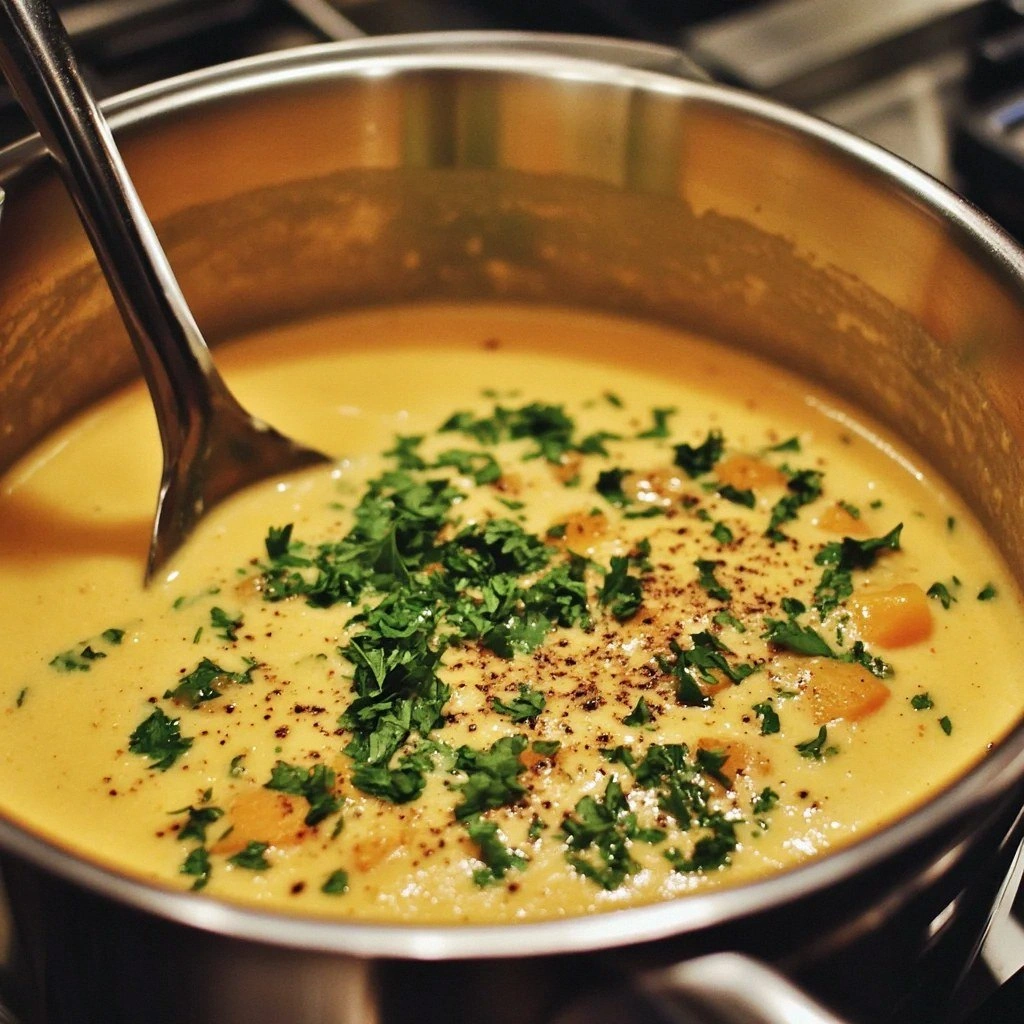
- Return the pureed soup to low heat. Shake the coconut milk can, crack it open, and drizzle in half a cup. Stir gently; the color will shift from burnt orange to sunset coral. Taste. Add salt until the flavors snap into focus—usually another pinch or two. If it feels thick, loosen with a splash of broth or water; it should coat the back of a spoon but still ripple like heavy cream.
- Simmer 2 more minutes to marry the coconut, then ladle into warm bowls. Garnish with parsley or cilantro leaves, a drizzle of coconut milk for Instagram swirls, and those toasted seeds if you made them. Serve immediately—the soup cools fast and the aroma is half the experience.
That is it—you did it. But hold on, I have got a few more tricks that will take this to another level.
Insider Tricks for Flawless Results
The Temperature Rule Nobody Follows
Serve this soup hot, not lukewarm. Heat heightens sweetness and aromatics, while tepid temperatures flatten everything into baby food. Warm your bowls in a low oven or by filling them with boiling water for 30 seconds, then dumping it. Your garnish will thank you too—herbs stay perky, coconut cream swirls remain photogenic.
Why Your Nose Knows Best
When the onions are nearly done, they should smell like French onion soup and look the color of champagne. If they are still white and sharp, keep going. If they verge on mahogany, you have overshot into bitter town. Trust the scent more than the clock; every onion is different, every stove moody.
The 5-Minute Rest That Changes Everything
After blending, let the soup sit off heat for 5 minutes. The starch granules hydrate fully, the bubbles settle, and the texture turns from foamy to liquid velvet. A friend tried skipping this step once—let's just say it looked like pumpkin latte foam and tasted like aerated disappointment. Patience, padawan.
Salt in Three Acts
Salt the onions at the start to draw moisture and build fond. Salt the broth to season the squash from within. Salt at the end to brighten the coconut milk. Layering prevents the dreaded last-minute salt dump that leaves the bottom of the bowl Sahara-dry.
Creative Twists and Variations
This recipe is a playground. Here are some of my favorite ways to switch things up:
Thai Firecracker
Swap the cinnamon for a stalk of lemongrass bruised with the back of a knife and add a bird's-eye chili slit lengthwise. Finish with lime juice and Thai basil. The soup becomes a hot-and-sour hug that makes your lips tingle.
Smoky Bacon Swap
Render two strips of bacon, remove the meat, and use the fat instead of olive oil to sauté the onions. Stir the crispy bacon bits back in at the end. You lose vegetarian status but gain campfire soul.
Apple Orchard Edition
Add one peeled, diced Gala apple with the squash. The apple melts into the puree, lending a sweet-tart backbone that tastes like cider doughnuts without the calories. A pinch of nutmeg seals the autumn deal.
Curry in a Hurry
Stir in a teaspoon of mild curry powder with the ginger. Suddenly the soup is sunset-yellow and tastes like a Mumbai café. Top with toasted coconut flakes for crunch.
Roasted Red Pepper Swirl
Blend in one charred red bell pepper for a smoky undertone and a color that practically glows in the dark. Garnish with smoked paprika oil for drama.
White Bean Protein Boost
Add a drained can of cannellini beans before blending. They disappear into the puree but add 6 grams of plant protein per serving, turning the soup from starter to meal.
Storing and Bringing It Back to Life
Fridge Storage
Cool the soup completely, then ladle into airtight glass jars or deli containers. It keeps up to 4 days, though the flavor peaks at day 2 when the spices have mingled like old friends at a reunion. Leave a centimeter of headspace so expansion does not crack the lid.
Freezer Friendly
Portion into silicone muffin trays, freeze, then pop out hockey-puck portions into zip bags. Each puck is roughly half a cup, so you can thaw exactly what you need. The soup stays luscious for 3 months. Beyond that, ice crystals sabotage the silky texture.
Best Reheating Method
Thaw overnight in the fridge, then warm gently over low heat with a splash of water or broth. Add a tiny splash of water before reheating—it steams back to perfection. Microwave works in a pinch, but stir every 30 seconds to prevent hot spots that scorch the coconut milk.