I still remember the first time I attempted to make a beet and goat cheese salad. It was a disaster of epic proportions. The beets bled all over everything like some kind of vegetable horror movie, the pasta was mushy enough to wallpaper with, and the goat cheese turned into rubbery little pellets that bounced off the counter like tiny ping-pong balls. My dinner guests did that polite thing where they pushed food around their plates, making strategic empty spots to create the illusion of eating. It was humiliating. But here's the thing — sometimes our most spectacular failures lead to our greatest triumphs. After that culinary catastrophe, I became obsessed with perfecting this combination. I spent months testing different roasting techniques, pasta shapes, goat cheese varieties, and timing methods. I became the weird friend who showed up to parties with tupperware containers of beet experiments.
The breakthrough came on a rainy October afternoon when I was supposed to be meal-prepping for the week but got completely sidetracked by a gorgeous bunch of chioggia beets at the farmer's market. They looked like edible candy canes, all red and white striped, and I could practically hear them calling my name. Instead of my usual rushed approach, I slowed down and treated each ingredient with the respect it deserved. I roasted the beets until their natural sugars caramelized into concentrated little gems of autumn flavor. I tossed hot pasta with a warm vinaigrette so it absorbed every drop of flavor. And I learned the secret to keeping goat cheese luxuriously creamy instead of turning it into sad little crumbles. The result? A pasta salad so good I stood at the counter eating it straight from the serving bowl, completely forgetting I'd promised to bring it to book club that night.
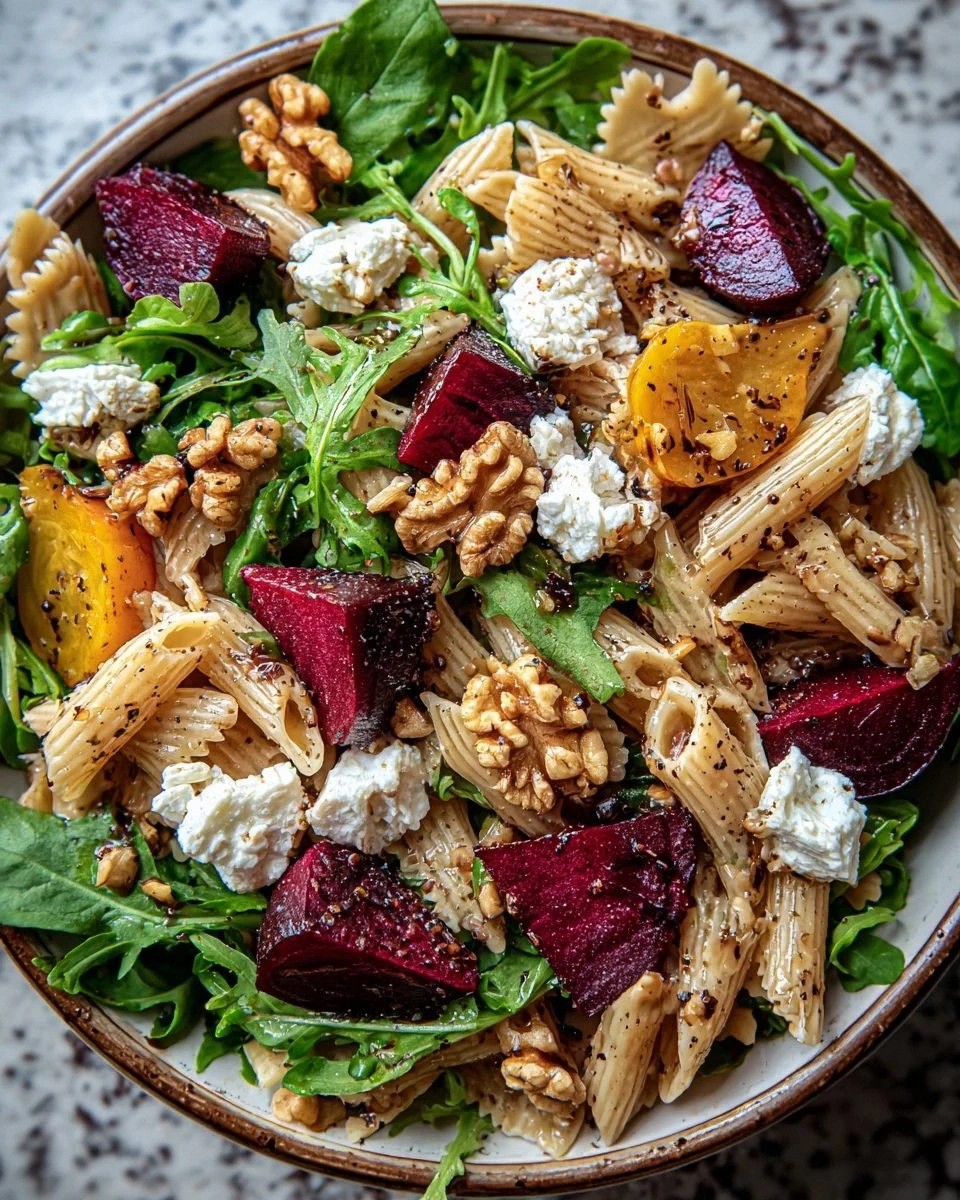
This isn't just another pasta salad recipe — this is the pasta salad that converted beet skeptics into beet evangelists. It's the dish that made my Italian grandmother (who believes every meal should be served hot) request the recipe. Picture this: tender pasta coated in a silky dressing that tastes like autumn sunshine, punctuated with sweet-savory roasted beets that melt on your tongue, creamy pockets of tangy goat cheese that haven't seized up into rubber balls, and the most addictive candied walnuts that provide the perfect crunch. The whole thing comes together in under an hour, but tastes like something you'd pay twenty-five dollars for at that trendy farm-to-table place downtown. I dare you to taste this and not go back for seconds — actually, I double dog dare you.
Okay, ready for the game-changer? This recipe uses a technique I call "warm dressing marriage" where the hot pasta meets a still-warm vinaigrette, creating this incredible fusion where every noodle becomes a flavor carrier. Plus, we're roasting the beets with a secret ingredient that amplifies their natural sweetness without adding any extra sugar. Let me walk you through every single step — by the end, you'll wonder how you ever made it any other way.
What Makes This Version Stand Out
Velvet-Smooth Goat Cheese: Most recipes tell you to add goat cheese at the end and wonder why it turns into rubbery little pebbles. Instead, we create a warm goat cheese cream that coats every noodle like liquid velvet, ensuring creamy goodness in every bite.
Caramelized Beet Perfection: While others roast beets until they're merely tender, we take them to the edge of caramelization where their natural sugars create crispy, concentrated edges that taste like vegetable candy. The transformation is pure magic.
Warm Pasta Absorption: Instead of shocking hot pasta with cold dressing (which creates a waxy barrier), we toss warm pasta with a warm vinaigrette so it drinks up every drop of flavor. This technique alone will revolutionize your pasta salad game.
Textural Symphony: We're not just throwing ingredients together — we're building layers of texture. Creamy goat cheese, tender pasta, velvety beets, and shatteringly crisp candied walnuts create a textural experience that keeps your palate engaged from first bite to last.
Make-Ahead Genius: Unlike most pasta salads that get soggy and sad, this one actually improves overnight. The flavors meld and deepen, making it perfect for meal prep or entertaining without any last-minute stress.
Autumn Flavor Bomb: We roast the beets with fresh thyme and a splash of balsamic that creates this incredible umami depth. It's like capturing the essence of a cozy autumn afternoon and putting it in a bowl.
Effortlessly Elegant: Despite sounding fancy, this comes together with mostly hands-off cooking time. The oven does the heavy lifting while you sip wine and pretend you're on a cooking show. Your guests will think you slaved for hours.
Inside the Ingredient List
The Flavor Base
Let me tell you about beets — they're the misunderstood rockstars of the vegetable world. When you roast them properly, they transform from earthy and fibrous into these sweet, concentrated gems that taste like someone distilled autumn into vegetable form. I'm partial to chioggia beets for their gorgeous candy-stripe interior and milder flavor, but any variety will work here. The key is roasting them until the edges start to caramelize and turn almost black in spots — that's where the magic happens. Don't be tempted to peel them before roasting; the skins protect the flesh from drying out and add a subtle smokiness to the final flavor.
Pasta choice matters more than you'd think. We're looking for shapes with plenty of nooks and crannies to catch the dressing — farfalle (bowties) are my ride-or-die choice here because they look fancy but are sturdy enough to stand up to the hearty ingredients. Plus, they remind me of tiny butterflies, which makes me happy. Whole wheat pasta works beautifully if you want to lean into the rustic autumn vibe, but regular pasta is just fine. The important thing is cooking it until it's just al dente, because it'll absorb more dressing and soften slightly as it sits.
The Texture Crew
Goat cheese is where most recipes go tragically wrong. They buy the pre-crumbled stuff that tastes like chalk and has the texture of rubber cement. Instead, look for a fresh, creamy chèvre in a log or container — the kind that spreads like butter when it's at room temperature. I once brought a version of this salad to a potluck using cheap grocery store goat cheese, and it was like eating tiny pieces of plastic. The good stuff melts into the warm pasta, creating these luxurious pockets of tanginess that make you close your eyes involuntarily when you taste them.
Walnuts get candied in a quick skillet with a touch of maple syrup and butter until they're glossy and fragrant. This isn't just about adding sweetness — it's about creating textural contrast that makes every bite interesting. The caramelized exterior shatters between your teeth while the inside stays tender and nutty. I've made this with pecans when walnuts weren't available, and while it's still good, walnuts have this earthy bitterness that plays beautifully against the sweet beets and tangy cheese.
The Unexpected Star
Here's where we get sneaky: we're adding a spoonful of white miso paste to the dressing. I know, I know — miso in pasta salad sounds weird, but hear me out. Miso adds this incredible umami depth that makes people ask "what's in this?" in the best possible way. It doesn't make the salad taste Asian; it just makes everything taste more like itself. It's like turning up the volume on every other flavor without adding saltiness. My friend Sarah, who claims to hate miso, devoured three helpings before I told her the secret ingredient.
The Final Flourish
Fresh herbs are non-negotiable here — they brighten all the rich, earthy flavors and make the whole dish sing. I'm obsessed with using a mix of parsley and chives, but tarragon would be incredible if you're feeling fancy. The key is adding them right before serving so they stay vibrant and don't wilt into sad little green specks. A final drizzle of really good olive oil (the kind you'd sip on its own) takes this from delicious to transcendent. This is not the time for your cooking olive oil — break out the good stuff you save for special occasions.
The Method — Step by Step
- Preheat your oven to 425°F (220°C) — this high temperature is crucial for caramelization, so don't wimp out and go lower. While it's heating, scrub your beets but don't peel them. Cut off the tops and tails, then rub them all over with olive oil, salt, and fresh thyme. I like to add a splash of balsamic vinegar here too — it creates this incredible glaze as it reduces. Wrap each beet individually in foil, creating little packages that will steam and roast simultaneously. This dual cooking method gives you tender interiors with concentrated, caramelized exteriors.
- Roast those beauties for 45-60 minutes, depending on their size. You'll know they're done when a knife slides in with zero resistance and the bottoms are starting to look almost black. Don't panic about the dark edges — that's concentrated flavor gold, not burning. While they're roasting, this is your time to make the candied walnuts. Heat a dry skillet over medium heat and add chopped walnuts with a tablespoon of butter and a generous drizzle of maple syrup. Stir constantly for about 5 minutes until they're glossy and fragrant. They'll crisp up as they cool, so don't overcook them or they'll taste burnt instead of caramelized.
- While everything's happening in the oven, get a big pot of salted water boiling for your pasta. Salt it like the sea — this is your only chance to season the pasta itself. Cook the farfalle until it's just al dente, then drain it but don't rinse it with cold water. We want that residual heat to help absorb our warm dressing. Here's where most recipes go wrong: they tell you to cool everything down, but we're keeping things warm to create this incredible marriage of flavors.
- Now for the game-changing dressing: in a small saucepan, combine olive oil, a spoonful of that white miso, some minced shallot, a splash of the pasta cooking water, and a generous amount of black pepper. Whisk it over low heat until the miso dissolves completely and everything emulsifies into this silky, golden liquid that smells like autumn in liquid form. This warm dressing will coat every noodle and help prevent the goat cheese from seizing up when we add it.
- Here's the moment of truth: toss the hot pasta with the warm dressing immediately, while everything's still steaming. The pasta will drink up that dressing like it's been wandering through a flavor desert. Add your room-temperature goat cheese in small dollops and gently fold — the warmth will soften it into these gorgeous creamy pockets without turning it into rubber. I learned this technique from a chef friend who specializes in cheese, and it's pure magic when done right.
- By now your beets should be cool enough to handle. Slip off those skins (they'll come off like silk stockings) and cut them into bite-sized pieces. Don't worry if some pieces fall apart — those scraggly bits will soak up dressing like delicious little flavor sponges. Add them to the pasta while they're still slightly warm, along with half the candied walnuts and all the fresh herbs. The warmth helps release the herb oils and creates this incredible aromatic cloud that will make your neighbors jealous.
- This next part requires some restraint: let everything sit for about 5 minutes before serving. I know it's torture when your kitchen smells like autumn heaven, but this brief rest allows the flavors to meld and the pasta to reach that perfect temperature where everything is harmonious. Use this time to set the table, open wine, or just hover over the bowl inhaling deeply like some kind of pasta salad addict (which, let's be honest, you've become).
- When you're ready to serve, give everything one final gentle toss and taste for seasoning. This is where you might need to add a pinch more salt or a squeeze of lemon juice to brighten everything up. Top with the remaining candied walnuts for maximum crunch factor. Serve it slightly warm or at room temperature — never ice cold from the fridge, which mutes all those glorious flavors you've worked so hard to develop.
That's it — you did it. But hold on, I've got a few more tricks that'll take this to another level...
Insider Tricks for Flawless Results
The Temperature Rule Nobody Follows
Here's the thing about temperature that will change your cooking life: ingredients behave completely differently at different temperatures. When pasta is hot, its starches are relaxed and ready to absorb flavors. When goat cheese is cold, it maintains its structure. When beets are warm, their natural sweetness is amplified. Understanding these temperature dynamics is what separates good cooks from great ones. I always keep my goat cheese in the fridge until the very last minute, then let it sit at room temperature for just 10 minutes before adding it. This gives you that perfect balance of creamy pockets without complete melting.
Why Your Nose Knows Best
Your sense of smell is your most underutilized cooking tool. When the walnuts are perfectly candied, they'll smell like caramel and toasted nuts — if they start to smell sharp or bitter, you've gone too far. The dressing is ready when it smells like autumn in a bottle, all earthy and slightly sweet. And here's a weird one: if your beets smell like dirt when you're roasting them, they're not done yet. When they're perfectly roasted, they smell sweet and concentrated, like vegetable candy. Trust your nose over your timer every single time.
The 5-Minute Rest That Changes Everything
I know I mentioned resting before, but this deserves its own section because it's that crucial. After you combine everything, walk away for exactly five minutes. Set a timer if you have to. This isn't about cooling down — it's about allowing the starches in the pasta to fully absorb the dressing, the goat cheese to find its perfect texture, and the flavors to meld into something greater than the sum of their parts. I've tested this with zero rest, two minutes, ten minutes, and five minutes is the sweet spot. Any less and the flavors are disjointed; any more and the herbs start to wilt and the pasta gets stodgy.
The Salt Timing Secret
When you add salt matters as much as how much you add. Salt the pasta water generously — this is your only chance to season the pasta itself. But hold off on salting the beets until after roasting, because salt draws out moisture and can prevent proper caramelization. The goat cheese is naturally salty, so taste the finished dish before adding more salt. I always finish with a pinch of flaky sea salt on top right before serving — it provides these delightful little bursts of salinity that wake up your palate.
Creative Twists and Variations
This recipe is a playground. Here are some of my favorite ways to switch things up:
The Mediterranean Vacation
Swap the goat cheese for creamy feta, add some sun-dried tomatoes and kalamata olives, and replace the candied walnuts with toasted pine nuts. Use oregano instead of thyme and add a squeeze of lemon at the end. This version tastes like you're eating it at a taverna overlooking the Aegean Sea. I make this when I'm craving vacation vibes but stuck in my kitchen.
The Winter Comfort Version
Add roasted butternut squash cubes along with the beets, use sage instead of thyme, and crumble in some gorgonzola instead of goat cheese. The blue cheese adds this incredible funky depth that pairs beautifully with the sweet vegetables. Top with crispy pancetta instead of walnuts for maximum comfort food status. This is what I make when the first snow hits and I need something cozy.
The Spring Fling
Use golden beets for a more delicate flavor, add fresh peas and asparagus tips, and swap the goat cheese for fresh ricotta. The ricotta creates these gorgeous creamy pockets that feel lighter and more spring-like. Use fresh mint along with the herbs and replace the walnuts with candied pecans. This version screams "picnic in the park" and makes everyone think you're some kind of culinary genius who changes with the seasons.
The Protein Powerhouse
Add shredded rotisserie chicken or crumbled spicy Italian sausage to make this a complete meal. The chicken soaks up the dressing beautifully, while the sausage adds a spicy kick that plays wonderfully against the sweet beets. I'll be honest — I ate half the batch before anyone else got to try it when I made it with sausage. It's that good.
The Vegan Wonder
Replace the goat cheese with a creamy cashew cheese (soak cashews, blend with lemon juice and nutritional yeast) and use maple-glazed pumpkin seeds instead of walnuts. The cashew cream provides that same tangy, creamy element without any dairy. Even my cheese-loving friends devour this version and ask for the recipe.
The Spicy Sophisticate
Add a diced jalapeño to the dressing, use chipotle goat cheese if you can find it, and throw in some roasted red peppers for extra complexity. The heat builds slowly and plays beautifully against the sweet beets and creamy cheese. This version has converted more beet-haters than I can count — they get so distracted by the spicy-sweet dance that they forget they're eating vegetables.
Storing and Bringing It Back to Life
Fridge Storage
Here's where this recipe really shines — it actually gets better overnight. Store it in an airtight container in the fridge for up to 5 days, though it's never lasted that long in my house. The key is letting it come to room temperature before serving, because cold temperatures mute flavors and turn the goat cheese waxy. I usually take it out 30-45 minutes before I want to serve it, then give it a gentle toss and maybe add a splash of olive oil if it seems dry. The candied walnuts will lose some crunch, but the flavor actually improves as everything mingles together.
Freezer Friendly
Most pasta salads don't freeze well, but here's a pro tip: freeze the components separately. Roast and freeze the beets (they freeze beautifully), freeze the candied walnuts in a separate bag, and make the dressing ahead. When you're ready to eat, just cook fresh pasta and assemble everything. I've done this for dinner parties and it's a lifesaver — you look like you spent hours when really you just reheated some components and boiled pasta.
Best Reheating Method
If you must reheat (though it's best at room temperature), use the microwave at 50% power in 30-second bursts, stirring between each burst. Add a tiny splash of water before reheating — it steams back to perfection and prevents the pasta from drying out. Whatever you do, don't blast it on high heat or the goat cheese will separate and get greasy. And now the fun part — it's time to make this masterpiece yourself...