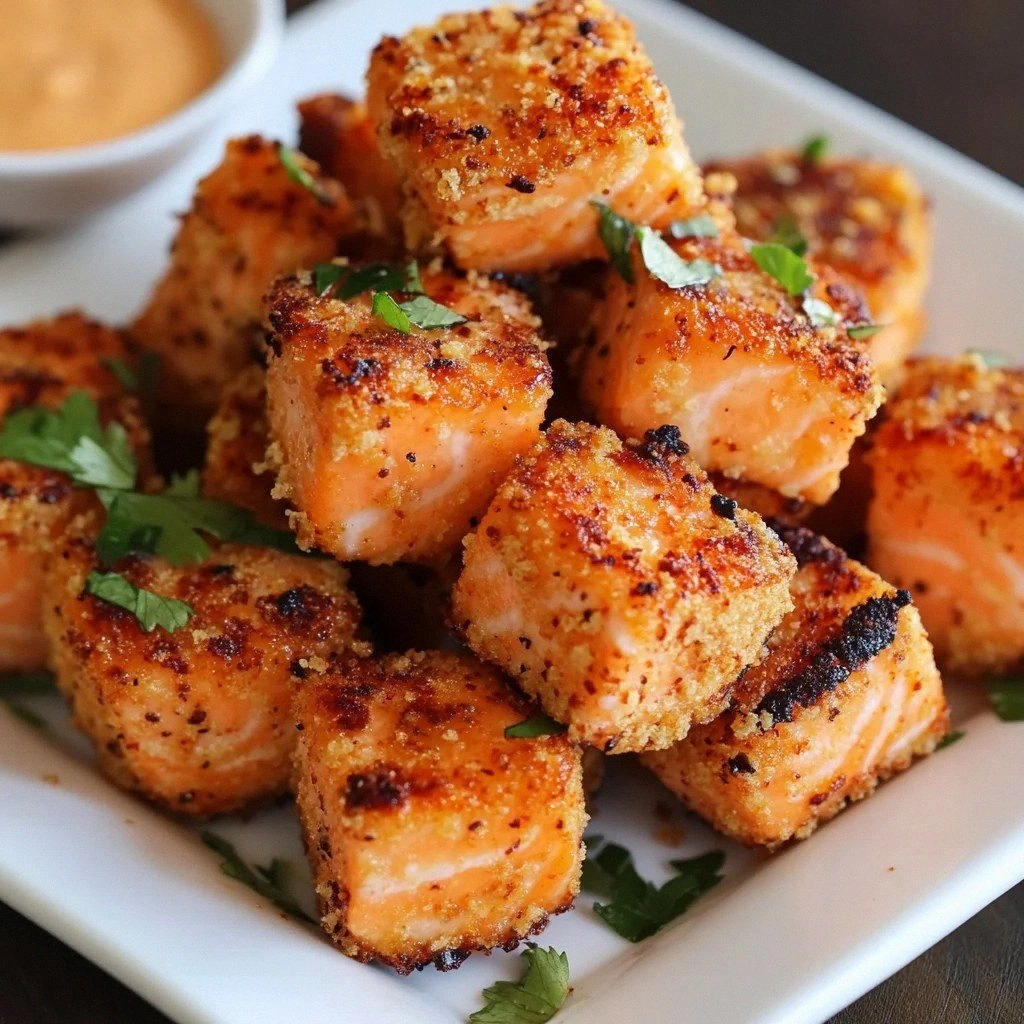
I still remember the first time I attempted to make salmon bites for a game-night crowd. I had this vision of crispy, golden cubes of fish that would vanish from the platter faster than the commercials during the Super Bowl. Instead, I served up sad, soggy nuggets that tasted like they had been microwaved inside a wet sock. My friends—diplomatic souls—mumbled something about “interesting texture” while reaching for the chip bowl. I retreated to the kitchen, cheeks burning hotter than the oven I had just abused, and vowed to crack the code for salmon that shatters between your teeth yet stays buttery inside. That midnight scavenger hunt through pans, oils, and sauces eventually produced these Crispy Bang Bang Salmon Bites, and I’m not exaggerating when I say they’ve become the stuff of local legend. One bite and you get the audibly crunchy crust, the gentle give of perfectly cooked salmon, and that sweet-spicy-tangy bang-bang glaze that clings like it’s got a crush on every cube.
Picture your kitchen right now: the extractor fan humming, a faint hiss of oil as it heats, the bright pop of green onions hitting a hot pan, and that first whiff of sesame and chili mingling in the air like they’re planning something deliciously illegal. You’ll taste the cornstarch-boosted crust that crackles like thin caramelized sugar, then the lush salmon that flakes into juicy petals. The sauce? Oh, the sauce is where the party starts—mayonnaise whipped with Thai sweet chili, a kiss of sriracha, and rice vinegar to keep things bright. It’s the culinary equivalent of your favorite leather jacket: smooth, a little edgy, and impossible to ignore.
This version is hands down the best you’ll ever make at home, and I’m staking my battered-and-bruised chef pride on that claim. While most recipes have you dredge, fry, and pray, we engineer texture at every step: a quick marinade to season the fish from the inside out, a double-coat that fries up shatter-crisp, and a final glaze applied in two waves so you get sticky lacquer plus a fresh drizzle right before serving. I’ll be honest—half the batch never makes it to the table when I’m “taste-testing,” and I’m pretty sure that’s a universal phenomenon you’ll embrace once you try them.
Okay, ready for the game-changer? We’re going to shallow-fry in a modest puddle of oil rather than deep-fry, which means less mess, less waste, and more control over that golden shell. Stay with me here—this is worth it. Let me walk you through every single step—by the end, you’ll wonder how you ever made it any other way.
What Makes This Version Stand Out
Let’s cut through the noise. Every corner of the internet claims to have “the ultimate” salmon bite, yet most deliver bland, greasy disappointment. Here’s why this one actually deserves the hype:
- Texture Reigns Supreme: A cornstarch-rice flour shell fries up glass-shatter crisp yet stays light, so the salmon interior stays moist—not steamed into rubber like those sad pub appetizers you’ve endured.
- Flavor From The Inside Out: A lightning-fast soy-ginger soak seasons the fish deeply, so every fiber carries umami instead of tasting like “diet chicken” with a jacket of sauce.
- Bang-Bang Balance: We blend sweet Thai chili with just enough sriracha to make your lips tingle, then brighten with lime so you keep coming back for “one more cube” until the tray is awkwardly empty.
- Weeknight Speed: From fridge to plate in under thirty minutes, including cleanup. Most recipes force you to wait for marinades or wrestle with liters of oil; we sidestep both without sacrificing an ounce of wow-factor.
- Crowd-Panic Proof: These bites hold their crunch for a solid hour at room temp, which means you can actually enjoy your own party instead of hiding in the kitchen frying batch after batch.
- Make-Ahead Friendly: Prep the salmon cubes and sauce up to a day ahead; when hunger strikes, you’re ten minutes away from hot, crispy perfection.
- Ingredient Integrity: No mystery fillers or doughy coatings—just honest fish, a whisper of starch, and a sauce that tastes like the beach vacation you’ve been postponing since 2019.
Alright, let’s break down exactly what goes into this masterpiece...
Inside the Ingredient List
Great dishes start with great grocery choices. Don’t worry—I’m not going to send you on a treasure hunt for esoteric spices you’ll use once and forget. Every item here pulls serious flavor weight, and most are pantry staples you probably already have.
The Flavor Base
Salmon is obviously the headliner, but not all fillets are created equal. Look for vibrant, coral-pink flesh that bounces back when pressed and smells like the ocean, not fishy. I prefer center-cut pieces because they’re uniform in thickness, which translates to evenly cooked cubes. If you can only find tail portions, that’s fine—just trim the thinner edges and snack on them as sashimi while you cook. Soy sauce delivers deep umami in seconds, but use the regular stuff, not low-sodium; we need the salt to season the fish quickly. Fresh ginger adds that bright heat that blooms in your mouth, and a micro-plane grater turns the fibrous root into a pulp that dissolves instantly into the soy.
The Texture Crew
Cornstarch is the unsung hero of shatter-crisp coatings. Its microscopic edges swell and dehydrate in hot oil, creating that glass-like crust you hear in every food-video ASMR dream. Rice flour joins the party to keep things feather-light; skip it and you’ll get a tougher shell closer to KFC than tempura. A whisper of baking powder forms micro-bubbles that lift the coating just enough to avoid density. Salt and white pepper season the starch layer so the crust isn’t bland—white pepper because it’s subtler and won’t speckle your beautiful gold armor with black dots.
The Unexpected Star
Mayonnaise haters, hear me out: a thin shmear on the salmon’s surface before dredging acts like glue, ensuring every nook gets coated while adding fat for extra browning. You won’t taste it; you’ll just wonder how your crust reached next-level mahogany. If the thought still creeps you out, Greek yogurt works, though it dulls the shine slightly.
The Final Flourish
Thai sweet chili sauce is the candy-coat backbone of bang-bang, but straight from the bottle it’s cloying. We balance it with sriracha for heat, rice vinegar for snap, and a squeeze of lime so the glaze tastes like summer fireworks. A final shower of sesame seeds adds tiny nutty pops, and scallions bring fresh onion without the tear gas effect of raw alliums.
Everything’s prepped? Good. Let’s get into the real action...
The Method — Step by Step
- Start by pat the salmon fillet dry with paper towels—moisture is the arch-enemy of crisp. Lay it on a cutting board, skin-side down (if your piece still has skin, just slip a sharp knife between flesh and skin, angling the blade away from you). Cut into 1-inch cubes; think of them as salmon croutons, uniform so they cook evenly. If you hit a thin section, stack two pieces and trim to match the rest. Toss the cubes into a bowl and marvel at how they already look like take-out jewels.
- Whisk together soy sauce, grated ginger, and a pinch of sugar in a small bowl. Pour this over the salmon, tossing gently with a spatula so every cube gets a glossy coat. Let it sit while you measure the dredge—about five minutes is plenty. You’ll see the edges turn slightly opaque as the salt begins to “cook” the exterior; that’s flavor locking in.
- Combine cornstarch, rice flour, baking powder, salt, and white pepper in a shallow dish. Mix with chopsticks or a fork until the colors are uniform; you want every granule seasoned so the crust isn’t an afterthought. The mixture should feel silky, like beach sand without the grit.
- Now the fun part: smear each salmon cube with the thinnest veil of mayo—just enough to make it tacky. Drop it straight into the starch mixture, pressing lightly so the coat adheres to all six sides. Set coated pieces on a wire rack; this prevents a soggy bottom and lets air circulate so the starch hydrates evenly. Repeat until you have a salmon army standing at attention.
- Heat oil in a heavy skillet until it shimmers like a mirage. You’re aiming for 350°F; if you don’t have a thermometer, flick a pinch of flour into the oil—it should sizzle gently, not spit like an angry cat. Too hot and the crust burns before the fish cooks; too cool and you’ll absorb oil like a kitchen sponge.
- Fry in small batches, leaving space between cubes so the oil temperature doesn’t plummet. After 45 seconds, nudge them with tongs; they should release easily once the crust sets. Turn gently—think rotating, not flipping—and cook another minute until they’re the color of golden graham crackers. Transfer to a fresh rack set over paper towels; the residual heat will finish cooking the centers while the crust drains.
- While the last batch sizzles, whisk together bang-bang sauce ingredients in a bowl large enough to toss the salmon. Taste and adjust: if it makes you pucker, add a teaspoon of honey; if it’s too sweet, another dash of vinegar. Remember the sauce will tame once it hits hot food, so err on the bold side.
- Once all salmon is fried and ever-so-slightly cooled, tumble half of it into the bowl of sauce. Toss quickly—just three or four folds—so every cube gets lacquered without steaming under a heavy blanket. Plate immediately, drizzle with the remaining sauce, and shower sesame seeds and scallions on top. The sizzle when it hits the pan? Absolute perfection.
That’s it—you did it. But hold on, I’ve got a few more tricks that’ll take this to another level...
Insider Tricks for Flawless Results
The Temperature Rule Nobody Follows
Between batches, let the oil climb back to 350°F. I set a timer for 90 seconds and use that break to sauce the previous batch; multitasking keeps the rhythm smooth. If you’re frying without a thermometer, drop a single grain of the dredge into the oil—immediate fizz means you’re ready. Cold oil equals greasy food, and nobody wants to chew on salmon that tastes like a harbor at low tide.
Why Your Nose Knows Best
When the crust is nearly done, you’ll smell a sweet, nutty aroma—think roasted popcorn. That’s your cue to pull the bites; waiting for deeper color usually means bitter, over-browned starch. Trust the scent more than the clock; every stove and pan combo behaves differently.
The Five-Minute Rest That Changes Everything
After saucing, let the salmon sit for five minutes. The glaze tightens, the crust steams just enough to bond with the sauce, and you avoid molten-lava mouth. A friend tried skipping this once—let’s just say it didn’t end well for his tongue or his pride.
Creative Twists and Variations
This recipe is a playground. Here are some of my favorite ways to switch things up:
Firecracker Salmon Bites
Sub sriracha with gochujang and add a spoon of honey. You’ll get deeper, fermenty heat and a mahogany glaze that clings like barbecue sauce at a cook-off. Perfect for friends who think bang-bang is too tame.
Coconut-Crusted Tropical Edition
Swap half the rice flour for unsweetened desiccated coconut and add a pinch of lime zest to the dredge. The crust toasts to candy-like shards that taste like vacation. Serve with a mango-jalapeño salsa and watch the platter disappear faster than free Wi-Fi passwords.
Buffalo-Bang Hybrid
Replace the sweet chili with equal parts Frank’s RedHot and melted butter, then finish with crumbled blue cheese. It’s the bar snack you didn’t know you needed—fiery, tangy, and unapologetically messy.
Peanut-Sesame Ramen Night
Toss the sauced salmon with chilled ramen noodles, julienned cucumbers, and a splash of noodle cooking water for a spicy sesame pasta salad. Great picnic hack for when you want protein without hauling a grill.
Low-Carb Cauliflower Swap
Use bite-size cauliflower florets instead of salmon. Roast them at 450°F until the edges char, then coat in the same bang-bang sauce. Vegetarians at the party will crown you their hero.
Mini Lettuce-Cup Tacos
Nestle two salmon bites inside baby-gem lettuce leaves, add shredded carrot and mint, and drizzle with leftover sauce. Instant handheld appetizer that won’t weigh down cocktail hour.
Storing and Bringing It Back to Life
Fridge Storage
Keep leftovers in an airtight container lined with paper towel to absorb moisture; they’ll stay decent for up to three days. Don’t seal while hot or you’ll trap steam and murder the crunch.
Freezer Friendly
Freeze uncooked coated cubes on a tray until solid, then bag them with parchment between layers. Fry from frozen, adding an extra 30-45 seconds. They taste 95 percent as good as fresh and save you on frantic weeknights.
Best Reheating Method
Add a tiny splash of water to the baking tray and cover loosely with foil; the gentle steam revives the interior while a final blast under the broiler re-crisp the exterior. Microwaves turn them to rubber, so avoid unless you enjoy chewing on fishy erasers.