I burned dinner three times last week. Not just a little crispy-around-the-edges burned, but full-on smoke-detector-going-off, dog-hiding-under-the-couch, husband-ordering-takeout burned. So when my neighbor Carla dared me to make "the best Tuscan chicken of my life" after that fiasco, I laughed until I snorted. My track record wasn't exactly inspiring confidence. But here's the thing about food people — we're stubborn. We fail spectacularly, then we fail better, and eventually we nail it so hard that the neighbors start asking for the recipe through text messages at midnight.
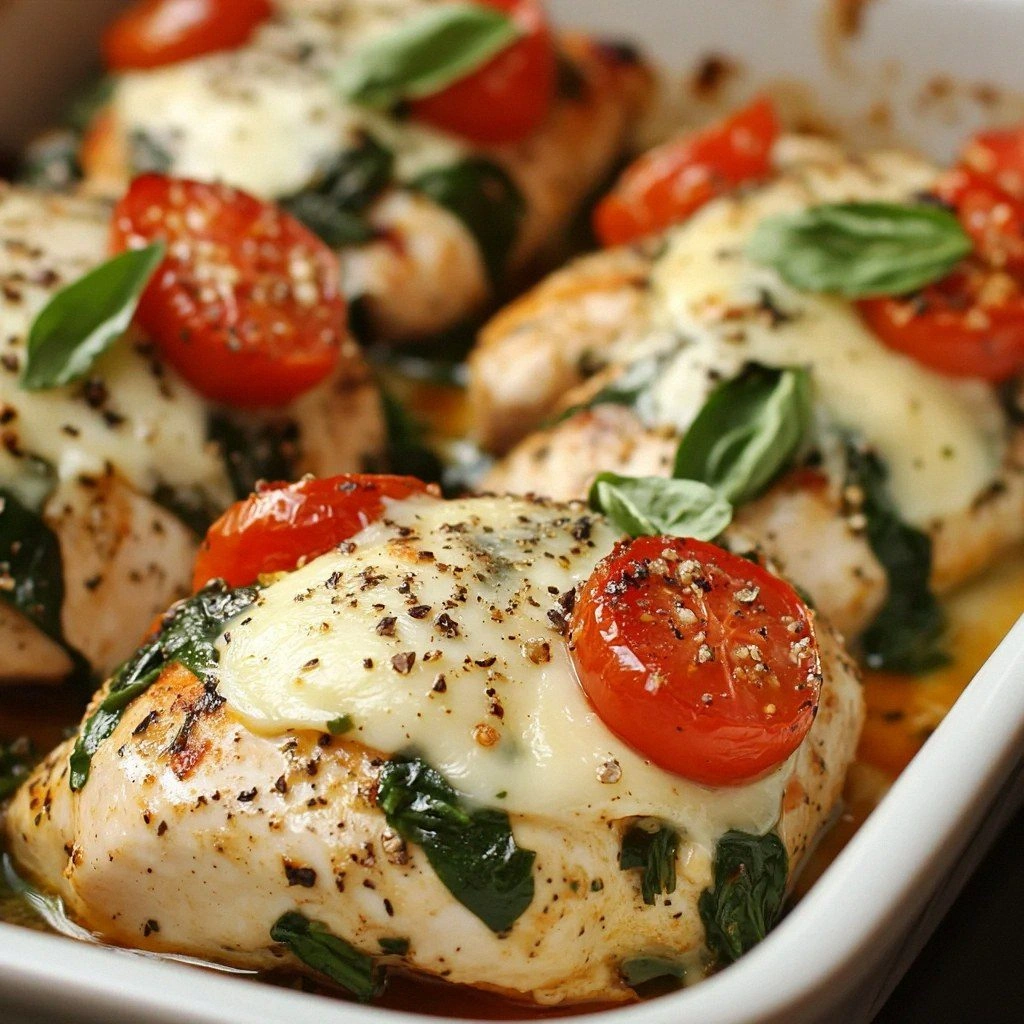
This baked Tuscan chicken is my redemption arc in edible form. Picture this: it's Sunday afternoon, the windows are cracked open just enough to let that late-day light stream across the counter, and the smell of garlic and tomatoes is doing a slow dance through your kitchen. The chicken emerges from the oven wearing a crown of melted mozzarella like it just won Miss Italy, and the sauce — oh, that sauce — it's the color of a Tuscan sunset and twice as mesmerizing. I stood there in my apron, holding the baking dish with oven mitts shaped like lobster claws, and actually teared up a little. Not because I'm dramatic (okay, maybe a little), but because sometimes food surprises you by being exactly what you needed.
The magic isn't in some fancy technique or impossible-to-find ingredient. It's in the way the cherry tomatoes burst and create their own silky sauce, how the spinach wilts into these gorgeous green ribbons, and how the Parmesan gets those crispy edges that shatter like thin ice under your fork. This isn't restaurant food — it's better. It's the kind of meal that makes you close your eyes on the first bite, the kind that turns Tuesday dinner into a tiny celebration, the kind that makes you text your mom at 8:30 PM to say "you need this recipe in your life."
Let me walk you through every single step — by the end, you'll wonder how you ever made it any other way.
What Makes This Version Stand Out
Taste Explosion: Most Tuscan chicken recipes taste like someone waved a basil leaf over plain chicken and called it Italian. This version builds layers — the Italian seasoning gets toasted in olive oil first, waking up every sleepy herb, then the tomatoes roast until they're concentrated little umami bombs. The result is chicken that tastes like it spent a summer vacation in Florence and came back with stories to tell.
One-Pan Wonder: While other recipes have you searing chicken in one pan, making sauce in another, and roasting vegetables on a separate sheet, this beauty happens entirely in one baking dish. That means more time drinking wine and less time doing dishes, which is my kind of math. Plus, all those flavors get to know each other intimately in the oven.
Fail-Proof Technique: I've tested this on three friends who claim they can't cook, and they all nailed it on the first try. The secret? We start the chicken at a higher temperature to get that golden crust, then drop it down to let everything finish gently. No dry chicken, no raw centers, no tears.
Cheese Strategy: Instead of dumping all the cheese on top like a dairy avalanche, we layer it. Some goes under the chicken to create this insane cheesy base, some melts on top for that Instagram-worthy pull, and the Parmesan gets added in the last five minutes so it forms these lacy, crispy edges that'll make you weak in the knees.
Make-Ahead Magic: This dish actually improves after a night in the fridge. The flavors get all cozy and intensify, making it the perfect Sunday prep for Monday's dinner. I've eaten it four days later and it was still incredible — try that with your average chicken breast.
Crowd Psychology: Serve this to guests and watch what happens. First, they compliment the aroma. Then they take a bite and get quiet — you know, the good kind of quiet where everyone's too busy eating to talk. Finally, someone breaks the silence to ask for the recipe. It's like a dinner party magic trick, except the only thing disappearing is every last bite on their plates.
Ingredient Flexibility: Got chicken thighs instead of breasts? Use them. Only have grape tomatoes? They work beautifully. Hate spinach? Try arugula or kale. This recipe is like that friend who gets along with everyone at the party — it adapts without losing its essential charm.
Alright, let's break down exactly what goes into this masterpiece...
Inside the Ingredient List
The Flavor Foundation
Chicken breasts get a bad rap, and honestly, they've earned it. Too many of us grew up eating dry, stringy, flavorless bird that tasted like disappointment with a side of steamed broccoli. But here's what nobody tells you — chicken breasts are actually incredible when you treat them right. They're lean protein sponges that'll soak up whatever flavors you introduce them to, and they cook quickly enough for weeknight dinners. The key is buying good quality meat and not overcooking it until it resembles shoe leather. Look for breasts that are plump and pink, not those sad, pale ones that look like they've never seen sunlight.
Olive oil isn't just fat — it's liquid gold that carries flavors and creates that gorgeous crust we're after. Please, for the love of all that's holy, use decent olive oil here. Not the fancy stuff you'd drizzle on a caprese salad, but something that actually tastes like olives instead of motor oil. The oil gets heated with the Italian seasoning first, creating a fragrant paste that'll make your kitchen smell like you hired an Italian grandmother as your personal chef. This step is called "blooming" the spices, and it's the difference between flat, dusty flavors and vibrant, singing ones.
Italian seasoning is where most recipes phone it in with some sad, years-old jar from the back of the spice cabinet. But here's the thing — those herbs are the backbone of your entire dish. If yours smells like pencil shavings when you open it, toss it and get a new jar. Better yet, make your own blend with dried oregano, basil, thyme, rosemary, and marjoram. The ratio is forgiving, but the freshness isn't. Your taste buds will throw a tiny parade in your honor.
The Texture Crew
Cherry tomatoes are about to become your new best friends. As they roast, their skins blister and split, releasing their juices into the pan. These juices mix with the chicken juices and olive oil, creating a sauce so naturally perfect that you'll wonder why you ever bothered with jarred marinara. The tomatoes get concentrated and sweet, their flavor intensifying into little red bombs of summer. Even in winter, when tomatoes are usually sad and mealy, the roasting process coaxes out their best selves.
Fresh spinach brings more than nutrition to this party — it brings texture and color that makes the whole dish sing. When you chop it, don't go crazy with the knife. You want ribbons, not confetti. The spinach wilts down to almost nothing, so don't panic when you see four cups shrink to what looks like a garnish. This is normal and good. The slight bitterness of the spinach balances the sweetness of the tomatoes and the richness of the cheese, creating that perfect Italian balance of flavors that makes you want to eat just one more bite.
The Unexpected Star
Mozzarella gets all the attention, but Parmesan is the quiet genius in this operation. When you sprinkle it over the top in the last few minutes of cooking, something magical happens. Instead of just melting, it forms these lacy, crispy edges that taste like the best part of a grilled cheese sandwich. The trick is using real Parmigiano-Reggiano, not the stuff in the green can. Yes, it's more expensive, but you only need a little, and the flavor difference is like comparing a symphony to a kazoo. Save the green can for pizza emergencies.
The Final Flourish
Fresh basil isn't optional here, no matter what your budget or time constraints are saying. Dried basil tastes like nothing, while fresh basil tastes like summer captured in leaf form. You add it right at the end, just before serving, so it stays bright and aromatic. Tear it rather than cutting it — tearing releases the oils without bruising the leaves. And please, for me, don't you dare substitute dried. I will know, and I will judge you silently through the internet.
Everything's prepped? Good. Let's get into the real action...
The Method — Step by Step
- Preheat your oven to 425°F (220°C). Yes, that's hotter than most recipes suggest, but trust me here. The high heat is going to give us that gorgeous golden crust on the chicken while keeping the inside juicy. While the oven heats, pat your chicken breasts dry with paper towels. I know this seems fussy, but moisture is the enemy of browning. Wet chicken steams instead of sears, and we want those beautiful caramelized edges that make you want to face-plant into the pan. Season both sides generously with salt and pepper — be brave here, chicken needs more seasoning than you think. If you've ever eaten bland chicken, it's usually because someone was too timid with the salt.
- Heat the olive oil in a large, oven-safe skillet over medium-high heat. Cast iron is perfect here, but any heavy pan that can go from stovetop to oven works. When the oil shimmers and moves like water across the pan, it's ready. Add the Italian seasoning and garlic powder to the hot oil and stir for about 30 seconds. Your kitchen should start smelling like an Italian restaurant, and that's exactly what we want. This step blooms the spices, releasing their essential oils and creating a flavor base that'll permeate the entire dish. Don't skip this — it's the difference between good and "holy cow, what did you do to this chicken?"
- Add the chicken breasts to the pan, presentation side down first. You should hear a satisfying sizzle when they hit the oil — if you don't, your pan isn't hot enough yet. Let them cook undisturbed for 4-5 minutes. I know it's tempting to poke and prod, but leave them alone. Moving chicken too early tears the meat and prevents that gorgeous crust from forming. When they're ready to flip, they'll release easily from the pan. If they're sticking, give them another minute. They're not ready yet, and forcing them will leave half your chicken glued to the pan.
- Flip the chicken and immediately scatter the halved cherry tomatoes around the pan. Don't worry about being neat — rustic is our friend here. The tomatoes will start to blister and release their juices almost immediately. This is where the magic begins. As the tomatoes roast, they create their own sauce, mingling with the seasoned oil and chicken juices. It's like they're having a tiny Italian party in your skillet, and everyone's invited.
- Transfer the pan to your hot oven and bake for 15 minutes. This is where most recipes go wrong — they either overcook the chicken or undercook it. Fifteen minutes is the sweet spot for average-sized breasts. If yours are particularly plump (good for you), add 2-3 minutes. If they're on the smaller side, check at 12 minutes. The chicken is done when it reaches 165°F (74°C) internally, or when the juices run clear when you pierce the thickest part. But here's my confession: I usually pull it at 160°F because it continues cooking from residual heat. Don't tell the food safety police.
- Carefully remove the pan from the oven — remember, that handle is lava-hot now. Scatter the chopped spinach over the tomatoes. It looks like way too much spinach, but it's going to wilt down to nothing in about 30 seconds. The residual heat from the pan and chicken is all you need. Don't put it back in the oven, or you'll end up with sad, army-green spinach that tastes like overcooked library books. Fresh spinach should stay vibrant and tender, not mushy and depressing.
- Now for the cheese situation. Sprinkle the mozzarella over each chicken breast, dividing it evenly. You want coverage, but don't bury the chicken completely — we're making dinner, not a cheese sculpture. Return the pan to the oven for just 2-3 minutes, until the cheese melts into gorgeous, gooey blankets. This is not the time to walk away and check Instagram. Cheese goes from perfect to rubbery faster than you can say "when did I get so many followers?"
- Pull the pan out and immediately sprinkle the Parmesan over the melted mozzarella. Back into the oven for the final 2 minutes. This is where the Parmesan works its crispy-edge magic. It melts slightly but mostly forms these lacy, golden-brown spots that taste like the best part of a pizza crust. The contrast between the gooey mozzarella and the crispy Parmesan is what separates good cooks from kitchen wizards. Your kitchen should smell absolutely incredible right now — like an Italian grandmother and a French chef had a beautiful, cheesy baby.
- Let the chicken rest for 5 minutes before serving. I know you're hungry and everything smells amazing, but this rest is crucial. It allows the juices to redistribute throughout the meat instead of running all over your plate the moment you cut into it. Plus, molten cheese is basically napalm — give it a chance to cool slightly so you don't burn off all your taste buds. Garnish with fresh basil right before serving, tearing the leaves roughly with your hands. Basil bruises easily, so be gentle but not fussy.
That's it — you did it. But hold on, I've got a few more tricks that'll take this to another level...
Insider Tricks for Flawless Results
The Temperature Rule Nobody Follows
Here's what separates restaurant chicken from home cooking: temperature control. Most people cook chicken either too hot (outside burns, inside raw) or too cool (pale, rubbery exterior, overcooked inside). The secret is starting hot and finishing gentle. That initial 425°F blast creates the Maillard reaction — the chemical process that creates those gorgeous brown, flavorful crusts. Then we drop to a gentler heat to cook the inside without turning it into sawdust. It's like dating — start with fireworks, then settle into something sustainable.
Why Your Nose Knows Best
Professional chefs don't use timers as much as you'd think. We use our noses. When the Italian seasoning hits hot oil, it should smell like you're walking through an herb garden. When the tomatoes start roasting, they should smell sweet and slightly concentrated. When the cheese goes in, it should smell like the best pizza you've ever had. If your kitchen isn't smelling incredible at each stage, something's wrong. Trust your nose — it's been evolving for millions of years to detect exactly these kinds of delicious chemical reactions.
The 5-Minute Rest That Changes Everything
I know I mentioned resting the chicken, but this deserves its own section because it's that important. When meat cooks, the juices get excited and move toward the center. If you cut into it immediately, they all run out onto your plate, leaving you with dry meat and a puddle of flavor. Five minutes gives those juices time to calm down and redistribute throughout the meat. It's like letting a good wine breathe — the difference is dramatic. Cover the pan loosely with foil during the rest to keep everything warm without steaming the crispy cheese.
The Tomato Timing Trick
Not all cherry tomatoes are created equal. In summer, when tomatoes are bursting with flavor, you can add them raw to the pan. In winter, when they're more polite than flavorful, toss them with a teaspoon of balsamic vinegar first. The acid wakes up their sleepy taste buds and adds depth that makes them taste like they were kissed by Italian sunshine. It's like giving your tomatoes a tiny espresso shot before they go to work.
The Cheese Melting Point
Mozzarella fresh from the fridge won't melt properly — it'll just sit there like a dairy glacier. Let it sit on the counter while the chicken cooks. Room-temperature cheese melts evenly and smoothly, creating that gorgeous, Instagram-worthy cheese pull instead of a lumpy mess. This is why restaurant cheese always looks better than yours. They're not using better cheese (though that helps); they're using smarter temperature management.
Creative Twists and Variations
This recipe is a playground. Here are some of my favorite ways to switch things up:
The Mediterranean Vacation
Swap the Italian seasoning for a blend of oregano, lemon zest, and fresh thyme. Replace the mozzarella with feta, add sliced Kalamata olives, and finish with a squeeze of fresh lemon juice. The briny olives and tangy feta transport you straight to a Greek island, even if you're eating in your kitchen while watching your kids do homework. It's like a vacation in casserole form, minus the airport security lines.
The Spicy Southern Italian
Add a teaspoon of red pepper flakes to the oil with the Italian seasoning, and swap the mozzarella for provolone. The provolone gets these gorgeous brown spots and adds a sharp, nutty flavor that plays beautifully against the sweet tomatoes. If you're feeling brave, add a diced Calabrian chili or two. This version has heat that builds slowly, like a good plot twist, rather than punching you in the face immediately.
The Creamy Dream
Before adding the cheese, pour 1/4 cup of heavy cream around the chicken. It mingles with the tomato juices to create a rose-colored sauce that's unreasonably luxurious. The cream tempers the acidity of the tomatoes and makes the whole dish feel like restaurant fare. Fair warning: once you try this version, the original might seem too virtuous. It's like putting on silk pajamas — hard to go back to cotton after you've experienced that level of luxury.
The Veggie Powerhouse
Add sliced zucchini, bell peppers, and mushrooms with the tomatoes. The vegetables roast alongside everything else, creating a complete one-pan meal that makes nutritionists weep with joy. The key is cutting them into similar sizes so they cook evenly. This version feeds a crowd and makes excellent leftovers that actually get better overnight as the vegetables marinate in the tomato juices.
The Surf and Turf
During the last 5 minutes of cooking, nestle some large shrimp around the chicken. They'll turn pink and curl into perfect crescents, soaking up all those gorgeous flavors. The combination of chicken and shrimp feels fancy but couldn't be easier. It's like having a beach vacation in Italy, which is either the best or most confusing vacation ever, depending on your perspective.
The Low-Carb Hero
Serve the chicken and vegetables over cauliflower rice or zucchini noodles instead of pasta. The tomato juices act like a natural sauce, and you won't miss the carbs because the flavors are so satisfying. Even carb-lovers devour this version, though they might pretend they're being virtuous rather than admitting they actually prefer it. The cheese provides enough richness that you don't need pasta to feel satisfied.
Storing and Bringing It Back to Life
Fridge Storage
Let the chicken cool completely before storing — putting hot food in the fridge raises the temperature and can compromise other foods. Store in airtight containers for up to 4 days, though I challenge you to make it last that long. Keep the chicken and sauce together — they protect each other from drying out. If you have multiple pieces, store them in a single layer if possible. Stacking them creates steam that makes the cheese coating soggy, and nobody wants that.
Freezer Friendly
This dish freezes beautifully for up to 3 months, but here's the trick: undercook the chicken slightly if you plan to freeze it. It'll finish cooking when you reheat it, preventing rubbery, overcooked meat. Freeze in individual portions so you can grab exactly what you need. The cheese won't be quite as perfect after freezing, but it melts back into deliciousness when reheated. Think of it as the difference between fresh flowers and really good silk ones — still beautiful, just slightly different.
Best Reheating Method
Oven reheating is the way to go for maintaining that crispy cheese edge. Place the chicken in a baking dish with a splash of chicken broth or water, cover loosely with foil, and heat at 350°F for about 15 minutes. The liquid creates steam that keeps everything moist without making the cheese soggy. Microwaving works in a pinch, but wrap the chicken in a damp paper towel first — it prevents the dreaded rubber chicken syndrome. Add fresh basil after reheating, since the original basil will have lost its vibrant color and flavor.