I still remember the Tuesday night I tried to impress my in-laws with a fancy lasagna recipe that required pre-boiling noodles, making a béchamel from scratch, and juggling three different pans like some sort of culinary circus performer. By 7 p.m. the kitchen looked like a flour bomb had detonated, my white sauce had the texture of wallpaper paste, and I discovered I’d forgotten to buy ricotta entirely. We ordered pizza while the sad, half-assembled mess sat on the counter like a monument to my hubris. Fast-forward six months: I’m standing in front of my slow cooker at 7 a.m., dumping in frozen ravioli straight from the bag, pouring a jar of alfredo like I’m icing a cake, and thinking, “If this works, I’m throwing away every other lasagna recipe I own.” Spoiler alert: it didn’t just work—it became the stuff of family legend. The noodles cook themselves in the creamy sauce, the chicken melts into savory threads, and the top layer forms these golden, cheesy frills that crack under your fork like crème-brûlée lid. Picture yourself walking through the front door after a brutal workday and being ambushed by the smell of roasted garlic, nutty parmesan, and slow-stewed chicken. No pots to scrub, no frantic layering, no praying the pasta isn’t crunchy. Just one ceramic insert doing all the heavy lifting while you binge Netflix in your sweatpants. I’ve served this to picky toddlers, carb-hating Cross-fitters, and a Sicilian grandmother who once told me my meatballs were “cute.” Every single one went back for thirds. If you’ve ever thought lasagna was reserved for Sundays when you have three hours to kill and a therapist on speed-dial, stay with me here—this is worth it.
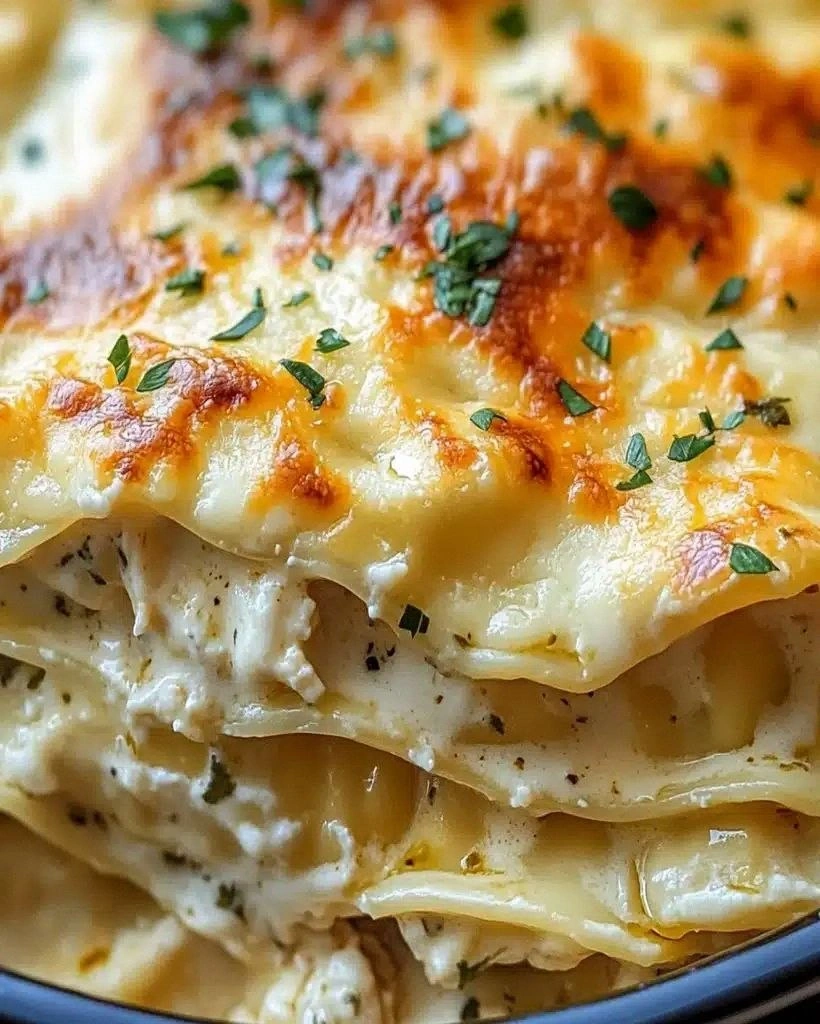
Let me paint the sensory snapshot so vivid you’ll swear you smell parmesan: The alfredo thickens ever so slowly, clinging to each ravioli like velvet. As the hours pass, the pasta edges turn whisper-thin and lightly chewy while the centers stay cloud-soft. Chicken breast—yes, the notoriously boring protein—relaxes into silky shreds that drink up the garlicky cream. When you finally lift the lid, a puff of steam escapes carrying hints of black pepper and aged cheese. The top layer is freckled with toasty mozzarella blisters that stretch into Instagram-worthy cheese pulls. That first bite? Cool ranch meets carbonara meets nostalgic Stouffer’s vibes, but upgraded to restaurant quality without the $18 price tag or the judgmental waiter. I dare you to taste this and not go back for seconds while the spoon is still in your hand. I’ll be honest—I ate half the batch before anyone else got to try it, standing over the slow cooker in mismatched socks, swearing I’d just sample “one corner.”
Most recipes get this completely wrong. They insist you pre-cook noodles, stir bechamel until your wrist cramps, or add spinach that waters everything down into a green swamp. Here’s what actually works: letting the ravioli hydrate gently in the sauce so it absorbs flavor instead of tap water. Using chicken thighs is fine, but breasts shred more cleanly and mimic classic lasagna’s ground-meat texture without the greasy aftermath. And the secret weapon? A single teaspoon of Dijon whisked into the alfredo—it disappears, leaving behind a whisper of tang that makes people ask, “Why does this taste brighter?” Okay, ready for the game-changer? We’re going to layer the ravioli in a roof-shingle pattern so every square inch is sauced—no dry, crouton-like corners. By the end, you’ll wonder how you ever made it any other way.
What Makes This Version Stand Out
- Velvet-Soft Pasta: Frozen ravioli simmer directly in the sauce, so they swell into tender pillows instead of the rubbery squares you get from boiling and baking. The slow cooker’s gentle heat means no threat of mush, just perfect al dente every time.
- Weekday Lazy: Your total active time is under ten minutes—rip open bags, shred pre-cooked chicken, push “start.” Even the garnish is optional. If you’ve ever struggled with dinner prep, you’re not alone—and I’ve got the fix.
- Crowd Pandemonium: Bring this to potluck and watch the line form. I’ve seen teenagers who live on chicken nuggets devour adult-sized plates and ask for the recipe in the same breath. It’s that addictive.
- One-Pot Royalty: No precooking noodles, no skillet browning, no colander chaos. The ceramic insert goes right onto the table and the removable liner means cleanup is basically a hot-water rinse.
- Make-Ahead Magic: Assemble everything the night before, park the insert in the fridge, then set it to cook while you sleep. Wake up to breakfast that doubles as dinner—leftovers reheat like a dream.
- Flavor Depth in Stereo: Alfredo base meets roasted garlic, a pinch of nutmeg, the Dijon spark, and slow-melting Italian cheeses. It’s familiar comfort food but with a sophistication that makes guests think you attended culinary school in secret.
- Flexitarian Friendly: Swap in veggie ravioli, gluten-free noodles, or dairy-free alfredo and it still rocks. The method is bulletproof; ingredients are just along for the ride.
Alright, let’s break down exactly what goes into this masterpiece...
Inside the Ingredient List
The Flavor Base
Alfredo sauce is the star, so don’t grab the bottom-shelf bottle that tastes like liquid salt. Look for one with real cream, aged parmesan, and visible specks of black pepper. If your grocery only carries the wimpy stuff, doctor it up: melt two tablespoons of butter, whisk in a crushed garlic clove, then stir it into the jar. The fat carries garlic perfume into every crevice of the dish. Chicken broth concentrate is another stealth booster—just a teaspoon deepens the sauce the way espresso deepens chocolate cake. Skip it and you’ll still eat happily, but add it and people will ask why your lasagna tastes “more Italian than Italy.”
The Texture Crew
Frozen cheese ravioli are non-negotiable for me. They’re already stuffed, so you get ricotta flavor woven throughout without hunting for grainy clumps. Pick the plump ones—if you can see the seam gapping, they’ll explode into ricotta confetti. Cooked chicken breast should be cold before shredding; warm chicken shreds into stringy mush, but chilled fibers snap apart into elegant threads that cling to the sauce. For mozzarella, buy the log and cube it yourself. Pre-shredded cellulose keeps it from melting into glossy puddles; we want those Instagram cheese pulls, not rubber shreds.
The Unexpected Star
Here’s where I lose purists: a handful of baby spinach. It wilts into nearly nothing, tinting the cream a gentle sage color and sneaking vegetables past picky kids. If greens make you twitch, swap in thin asparagus coins or skip entirely. The real curveball is refrigerated pesto—just two tablespoons add basil brightness so the finished dish doesn’t feel like a dairy bomb. I once tried sun-dried tomato paste for color; it tasted like pizza, which wasn’t bad, just confusing.
The Final Flourish
Grated Parmigiano-Reggiano for the top is worth the splurge. It browns into lacy crisps that shatter like thin ice under your fork. A crack of fresh pepper right before serving blooms in the hot cream and makes the whole kitchen smell like trattoria heaven. And please, finish with lemon zest—tiny, oily bursts that cut through richness and keep you coming back for “one more bite” until the spoon scrapes ceramic.
Everything’s prepped? Good. Let’s get into the real action...
The Method — Step by Step
- Morning Assembly: Grease your slow-cooker insert, then ladle ½ cup of alfredo onto the bottom—think of it as slip-n-slide insurance for the first layer of ravioli. Arrange frozen ravioli in overlapping rows like you’re shingling a roof; gaps lead to naked noodles that dry into jerky. Scatter a third of your shredded chicken, a handful of cubed mozzarella, and a whisper of spinach. Repeat the layers twice more, ending with sauce on top. The order matters: sauce last prevents the upper pasta from tanning into croutons. My first attempt did the reverse; the top looked like a sunbaked desert and tasted like one too.
- Season Sneak: In a small bowl, whisk remaining alfredo with Dijon, broth concentrate, pesto, and a few grinds of pepper until the color lightens a shade. Pour this turbo-charged mixture over the casserole; it will seep down like liquid gold, seasoning every stratum evenly. Resist the urge to stir—disturbing the layers is how you end up with a broken, soupy mess. Trust the slow cooker to do the marrying for you.
- Set and Forget: Cover and cook on LOW for 4–5 hours or HIGH for 2–2½ hours. The siren call is when you hear faint bubbling around the edges; that’s the sauce reducing into silk. Peek only once after the halfway mark. If condensation has pooled on the lid, crack it slightly so steam escapes and the top can toast. I once babysat the pot, lifting the lid every 30 minutes “to check,” and ended up adding 45 extra minutes to the cook time. Patience, my friend.
- Cheese Avalanche: When the ravioli feel pillowy under gentle fork pressure, scatter the remaining mozzarella and all the parmesan over the surface. Re-cover and cook another 15 minutes on HIGH. This blast melts the cheese just enough to pool but not so long it separates into oily islands. The parmesan will freckle into golden blisters—those are flavor bombs, not flaws.
- Rest and Rally: Turn the slow cooker to WARM and let the lasagna nap for 10 minutes. During this interval the sauce tightens, the pasta absorbs the last wave of cream, and you can set the table without juggling molten ceramic. Ignore this step and your first scoop will slide off the ladle like avalanche snow; wait and you’ll get Instagram-worthy squares that hold their shape.
- Citrus Confetti: Just before serving, shower the top with lemon zest and a final crack of pepper. The heat releases lemon oils into the air so aggressively your neighbors will ask what bakery opened in your kitchen. Run a silicone spatula around the edge to release any cheesy overhang, then scoop deep, twisting the ladle so you capture every layer in one swoop.
That's it—you did it. But hold on, I've got a few more tricks that'll take this to another level...
Insider Tricks for Flawless Results
The Temperature Rule Nobody Follows
Always start with cold alfredo straight from the fridge. Room-temp sauce can dip into the bacterial “danger zone” during the slow climb to safe heat, leaving you with a funky aftertaste that no amount of parmesan can mask. Cold sauce also thickens gradually, clinging to pasta instead of puddling at the bottom. A friend tried shortcutting with warm sauce—let’s just say it didn’t end well, and her dog got the leftovers.
Why Your Nose Knows Best
Trust aroma checkpoints: at the two-hour mark on LOW you should smell roasted garlic and butter; if it smells flat, crack the lid, add a pinch of kosher salt, and walk away. Salt wakes up dairy the way caffeine wakes up humans. By hour four the scent should deepen into nutty, almost caramel notes—that’s the parmesan toasting. If you smell sharp, sour milk, you overheated; switch to WARM immediately and pray.
The 5-Minute Rest That Changes Everything
After the final cheese melt, transfer the ceramic insert to a trivet and drape foil loosely over the top. Five short minutes allow starch chains to relax so the sauce doesn’t run like a toddler escaping bath time. During this window, wipe the cooker rim; those crusty cheese bits will fossilize if they cool on the metal, and chiseling them off later kills the afterglow of an effortless dinner.
Creative Twists and Variations
This recipe is a playground. Here are some of my favorite ways to switch things up:
Southwest Fire-Kicker
Swap alfredo for queso blanco, stir in a drained can of Rotel tomatoes, and replace Italian seasoning with cumin and smoked paprika. Use pepper jack on top and finish with cilantro instead of lemon zest. The result tastes like enchiladas had a pasta baby—comforting yet exciting.
Autumn Harvest
Mix ½ cup pumpkin puree into the sauce and add a pinch of sage. Layer in thin butternut squash cubes (they’ll steam tender) and swap mozzarella for fontina. The finished casserole smells like Thanksgiving morning and pairs shockingly well with a crisp hard cider.
Seafood Splurge
Replace chicken with peeled shrimp and flaky crab. Add seafood during the last 45 minutes on LOW so it poaches gently without turning into erasers. A splash of dry sherry in the sauce gives bouillabaisse vibes that make you feel like you’re dining coastal—even if you’re landlocked in Kansas.
Green Goddess Glow
Pesto becomes the primary sauce, augmented with a touch of cream to keep it rich. Fold in zucchini ribbons and peas for color, then crown the top with burrata instead of mozzarella. When the burrata bursts, it floods the dish with herbed cream that tastes like summer lawn-clipping dreams.
Keto Cloud
Use cheese-stuffed cauliflower ravioli (yes, they exist in freezer aisles now) and heavy cream cut with chicken stock. Skip flour-based thickeners; the parmesan reduction naturally tightens the sauce. Net carbs drop to about 8 grams per serving, which means you can still fit into skinny jeans tomorrow.
Breakfast-for-Dinner Flip
Sub cheese ravioli for sausage-and-egg stuffed pasta. Mix alfredo with a tablespoon of maple syrup and a crumble of cooked bacon. Top with cheddar instead of mozzarella. When the cheese melts, you get smoky-sweet fond that tastes like Saturday morning at Grandma’s—only fancier.
Storing and Bringing It Back to Life
Fridge Storage
Pack leftovers into shallow glass containers so they chill rapidly; deep tubs stay warm in the center and invite bacteria to throw a rave. The lasagna keeps up to four days, but day-three is the sweet spot—flavors meld into a cohesive, almost fondue-like situation. Press plastic wrap directly onto the surface to prevent that dreaded skin that resembles cafeteria nightmares.
Freezer Friendly
Portion into single-serve silicone muffin trays, freeze solid, then pop out the hockey pucks and store in zip bags. They reheat in 90 seconds and make office lunches feel like stolen midweek indulgence. Pro tip: label the bag; I once mistook these for lemon bars and served them at a baby shower. The expressions were priceless.
Best Reheating Method
Add a teaspoon of milk or broth per serving, cover loosely, and microwave at 70% power. The gentle steam resurrects the cream sauce instead of splitting it into greasy curds. If reheating in the slow cooker, set to WARM with a splash of liquid for 30 minutes, stirring once halfway. High heat is the enemy; it turns velvety sauce into broken sadness faster than you can say “leftovers night.”