I remember the night I almost ruined a dinner party because I’d misread a recipe for a simple dip and ended up with a bland, watery mess. The guests were waiting, the table was set, and I was scrambling, hoping to salvage the situation. That disaster taught me that a great dip can make or break a gathering, and it sparked my obsession with finding the perfect blend of flavor, texture, and visual appeal.
Fast forward to this morning, I’ve perfected a Muhammara that feels like a secret weapon in any kitchen. It’s smoky, sweet, and peppery all at once, with a velvety body that coats the palate like velvet, yet has a crunchy bite that shatters like thin ice when you bite into it. The aroma alone—roasted peppers, toasted walnuts, and a hint of pomegranate molasses—fills the room and makes you want to taste it before you even see it.
What makes this version stand out is not just the combination of ingredients but the method: roasting the peppers to bring out deep caramelization, lightly toasting the walnuts for nutty depth, and blending them with a splash of citrus and a touch of heat that lingers on the tongue. I dare you to taste this and not go back for seconds; it’s hands down the best version you’ll ever make at home. I’ll be honest—I ate half the batch before anyone else got to try it, and the rest of the pot was gone in minutes.
Picture yourself pulling this out of the oven, the whole kitchen smelling incredible, and guests lining up for a taste. The texture is smooth enough to spread, yet the walnuts give a satisfying crunch. If you’ve ever struggled with a dip that’s too thick or too thin, you’re not alone—and I’ve got the fix. Let me walk you through every single step—by the end, you’ll wonder how you ever made it any other way.
What Makes This Version Stand Out
- Flavor: The roasted red peppers bring a deep, smoky sweetness that’s amplified by the caramelization of the walnuts. The pomegranate molasses adds a subtle tartness that balances the natural sweetness, creating a complex flavor profile that’s both familiar and adventurous. This is the kind of dip that can turn a simple snack into a conversation starter.
- Texture: The blend of walnuts and breadcrumbs gives the dip a creamy yet slightly gritty mouthfeel that feels luxurious on the tongue. The walnuts are toasted just enough to keep their crunch, preventing the dip from becoming mushy. The result is a spread that glides across bread or crackers but still offers a satisfying bite.
- Simplicity: Despite its sophisticated flavor, the recipe requires only a handful of ingredients and a basic roasting step. No fancy gadgets, no secret sauces—just good quality produce and pantry staples. This simplicity makes it a go-to recipe for both novice cooks and seasoned chefs.
- Uniqueness: Most Muhammara recipes lean heavily on tomato or pepper but overlook the nutty depth that walnuts provide. By combining walnuts with a touch of cumin and Aleppo pepper, this version creates a flavor profile that feels both traditional and fresh. It’s a dip that can stand alone or complement a wide array of dishes.
- Audience Appeal: Guests rave about the balance of sweet, smoky, and spicy. The dip works well as an appetizer, a side, or a spread on sandwiches. Its bright color and vibrant flavors make it Instagram-worthy for any gathering.
- Ingredient Quality: Using fresh, organic peppers and high-quality walnuts elevates the entire dish. The quality of each component shines through, making the dip feel luxurious and homemade.
- Cooking Method: Roasting the peppers at a high temperature caramelizes the sugars, while lightly toasting the walnuts enhances their nutty aroma. These steps are quick yet transformative, turning ordinary ingredients into a dish that feels elevated.
- Make‑Ahead Potential: The dip can be made a day ahead; the flavors actually deepen when the ingredients sit together. It freezes well, and reheating with a splash of water restores its silky texture.
Inside the Ingredient List
The Flavor Base
Roasted Red Bell Peppers are the star of this dip; their sweet, smoky flavor forms the backbone of the taste profile. When you roast them at a high heat, the sugars caramelize, producing a deep, almost charred sweetness that’s hard to resist. The skins are easy to slough off, and the flesh becomes silky, ready to be blended into a smooth sauce. If you skip the peppers, the dip loses its signature warmth and depth.
The Texture Crew
Walnuts bring a buttery richness and a satisfying crunch that keeps the dip from becoming a soupy mess. Toasting them lightly before blending adds a nutty aroma that pairs beautifully with the roasted peppers. Breadcrumbs act as a subtle thickener, giving the dip body without overpowering the other flavors. They also absorb excess moisture, preventing the dip from separating. If you’re gluten-free, simply swap in gluten-free breadcrumbs or oat flour.
The Unexpected Star
Pomegranate Molasses is the secret weapon that gives Muhammara its signature tang and a hint of sweetness. It’s a thick, syrupy reduction of pomegranate juice that adds depth and complexity. The acidity brightens the dip, cutting through the richness of the walnuts and the sweetness of the peppers. If you can’t find pomegranate molasses, a mix of balsamic vinegar and a splash of pomegranate juice can mimic the flavor, though the texture will differ slightly. This ingredient is what makes the dip feel like a gourmet creation.
The Final Flourish
Spices like cumin, Aleppo pepper, and cayenne bring warmth and a gentle heat that lingers on the palate. Lemon juice adds a citrusy brightness that lifts the entire flavor profile. Olive oil ties everything together, giving the dip a silky mouthfeel and a subtle fruity undertone. Salt and pepper are essential for seasoning, but they’re added in moderation to let the other flavors shine. A final drizzle of olive oil before serving adds a glossy finish and a hint of richness.
Everything’s prepped? Good. Let’s get into the real action.
The Method — Step by Step
- Preheat your oven to 425°F (220°C). Place the whole red bell peppers on a baking sheet lined with parchment paper. Roast them for about 20 minutes, turning halfway through, until the skins blister and blacken. This process caramelizes the natural sugars, giving the peppers that smoky sweetness. Keep an eye on them; over-roasting will make them too dry.
- While the peppers roast, trim the stems and seeds, then place the peppers in a bowl of hot water for 5 minutes. Afterward, transfer them to an ice bath to stop the cooking process. The hot water loosens the skins, making them easy to peel off. This step is crucial for a smooth texture.
- In a dry skillet over medium heat, toast the walnuts until fragrant and lightly browned, about 3-4 minutes. Stir frequently to prevent burning. The nuts should emit a nutty aroma that’s unmistakable. Once toasted, let them cool slightly before adding them to the blender.
- Add the peeled peppers, toasted walnuts, breadcrumbs, 3 cloves of garlic, 2 tbsp lemon juice, 3 tbsp pomegranate molasses, 0.5 tsp cayenne, 1 tsp Aleppo pepper, 1 tsp cumin, and 2 tbsp olive oil to a high-speed blender. Pulse until the mixture is smooth but still slightly chunky. The texture should be thick enough to hold its shape when spread.
- Taste the dip and season with salt and pepper to your preference. If you want a brighter tang, add another splash of lemon juice. For extra heat, sprinkle in a pinch of chili flakes. Remember, the pomegranate molasses already adds a subtle sweetness, so be cautious with additional sugar.
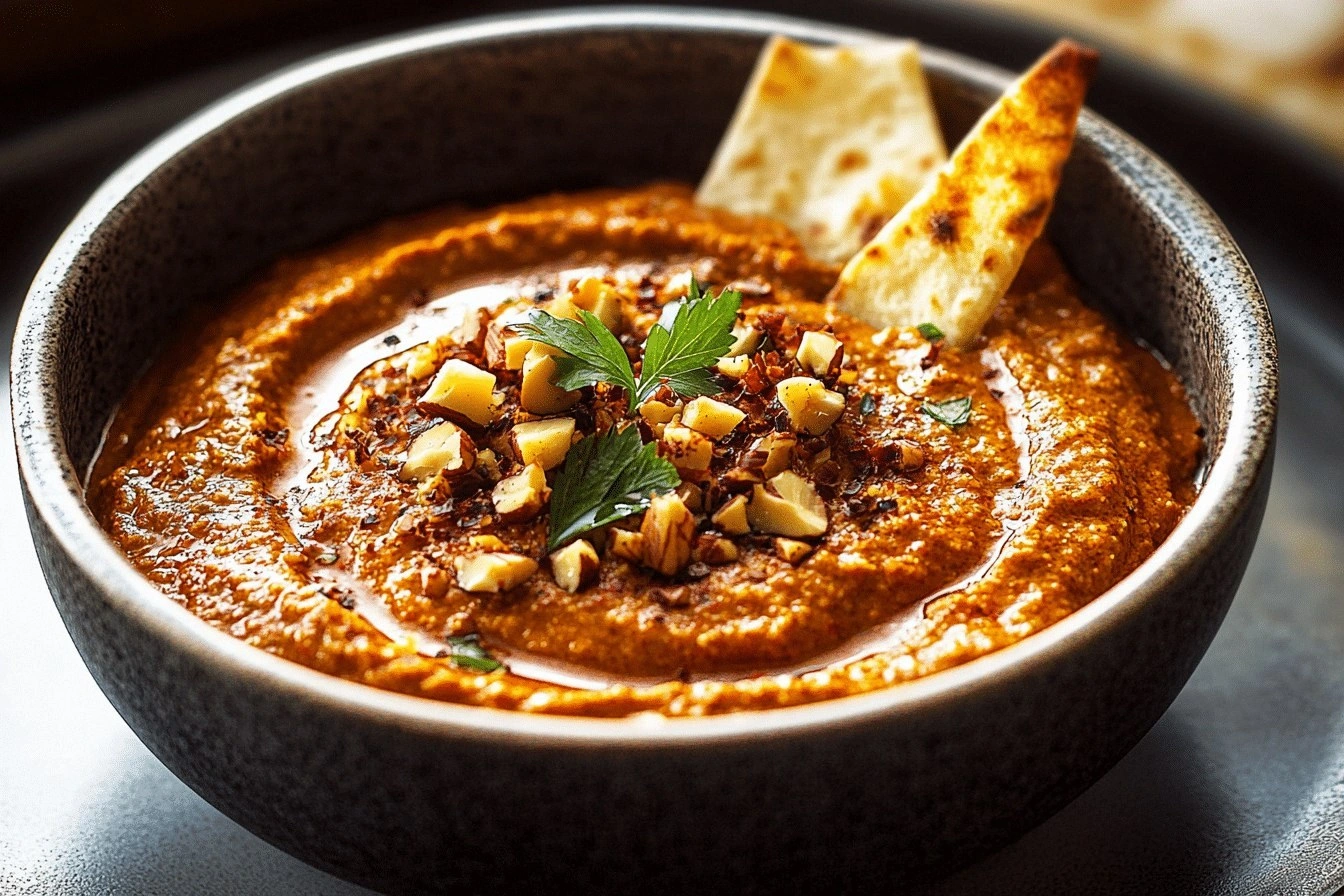
- Transfer the Muhammara to a serving bowl, drizzle a little olive oil over the top, and garnish with chopped walnuts, fresh parsley, and a sprinkle of chili flakes. This garnish adds visual appeal and an extra burst of flavor. The olive oil creates a glossy finish that makes the dip look restaurant‑grade.
- Let the dip sit at room temperature for about 10 minutes before serving. This allows the flavors to meld together and the texture to settle. If you’re serving immediately, you can skip this step, but the dip will be even more flavorful after resting.
- Serve with toasted pita wedges, fresh vegetable sticks, or as a spread on crusty bread. The dip pairs wonderfully with grilled chicken or lamb, and it’s a great addition to mezze platters. The bright color and bold flavor make it a showstopper at any gathering.
That's it — you did it. But hold on, I've got a few more tricks that'll take this to another level. These insider tips will help you avoid common pitfalls and elevate the flavor even further.
Insider Tricks for Flawless Results
The Temperature Rule Nobody Follows
Many cooks roast peppers at a lower temperature, which results in a longer cooking time and a less caramelized flavor. By using a high heat of 425°F, you get a quick char that locks in sweetness. The quick roast also keeps the peppers moist and easy to peel. Don’t be tempted to lower the temperature; the difference in flavor is noticeable.
Why Your Nose Knows Best
The aroma of toasted walnuts is a reliable indicator of doneness. When they start to smell nutty and slightly caramelized, they’re ready. Over toasting can turn them bitter, so trust your nose. This simple sensory cue saves you from a ruined dip.
The 5-Minute Rest That Changes Everything
After blending, let the dip rest for at least 5 minutes. This short rest allows the flavors to meld and the texture to thicken slightly. A dip that’s too liquid will be hard to spread and won’t hold up on bread. This step is often skipped, but it’s essential for a professional result.
The Right Blend Speed
Start the blender on low and gradually increase the speed. This controlled approach prevents the mixture from splattering. It also ensures a smoother consistency. If you use a very high speed from the start, you risk a watery dip.
The Perfect Garnish Balance
Garnishing with chopped walnuts and parsley not only adds visual appeal but also enhances flavor. The walnuts add crunch, while the parsley provides a fresh herbal note that cuts through the richness. A sprinkle of chili flakes adds a subtle heat that lingers. The garnish should be the final touch, not the main attraction.
Creative Twists and Variations
Smoky Chipotle Variation
Swap the Aleppo pepper for chipotle powder for a smoky heat that pairs well with grilled meats. Add a splash of chipotle in adobo for an extra kick. This version is perfect for a Mexican‑inspired mezze. The smoky undertone elevates the dip to a new flavor level.
Herby Basil Twist
Incorporate fresh basil leaves into the blend for a sweet, aromatic finish. Basil adds a green note that brightens the dip. This variation is ideal for a spring gathering. It pairs wonderfully with grilled vegetables.
Spiced Pumpkin Addition
During autumn, add roasted pumpkin cubes to the blend for a sweet, earthy depth. The pumpkin’s natural sweetness complements the pomegranate molasses. This version is festive for Thanksgiving or fall parties. The color shift adds visual intrigue.
Citrus Burst Variation
Replace half of the lemon juice with orange zest and juice for a sweeter citrus profile. The orange adds a bright, tropical note. This variation works great with seafood platters. It’s a refreshing twist for summer gatherings.
Nutless Vegan Option
Use sunflower seeds or pumpkin seeds instead of walnuts for a nut-free version. Toast the seeds to bring out their flavor. This variation is perfect for guests with nut allergies. The texture remains crunchy and satisfying.
Sweet & Smoky BBQ Dip
Stir in a tablespoon of smoky BBQ sauce and a pinch of brown sugar for a sweet, tangy dip. The BBQ sauce adds depth and a subtle caramelization. This version is ideal for a backyard barbecue. It’s a crowd‑pleaser that pairs with ribs and grilled corn.
Storing and Bringing It Back to Life
Fridge Storage
Store the dip in an airtight container in the refrigerator for up to 4 days. The flavors will mellow and deepen over time. If the dip thickens, stir in a splash of water or olive oil to restore its silky texture. Keep it chilled until serving to maintain freshness.
Freezer Friendly
Muhammara freezes well; place it in a freezer‑safe container or zip‑lock bag and store for up to 2 months. Thaw overnight in the refrigerator before serving. Reheat gently on the stovetop with a splash of water or in the microwave, stirring frequently. The dip regains its original consistency when reheated properly.
Best Reheating Method
The best way to reheat Muhammara is on low heat in a small saucepan, adding a teaspoon of water at a time. Stir constantly to prevent scorching. The water helps the dip return to its silky, spreadable state. Once heated, give it a quick taste and adjust seasoning if needed.