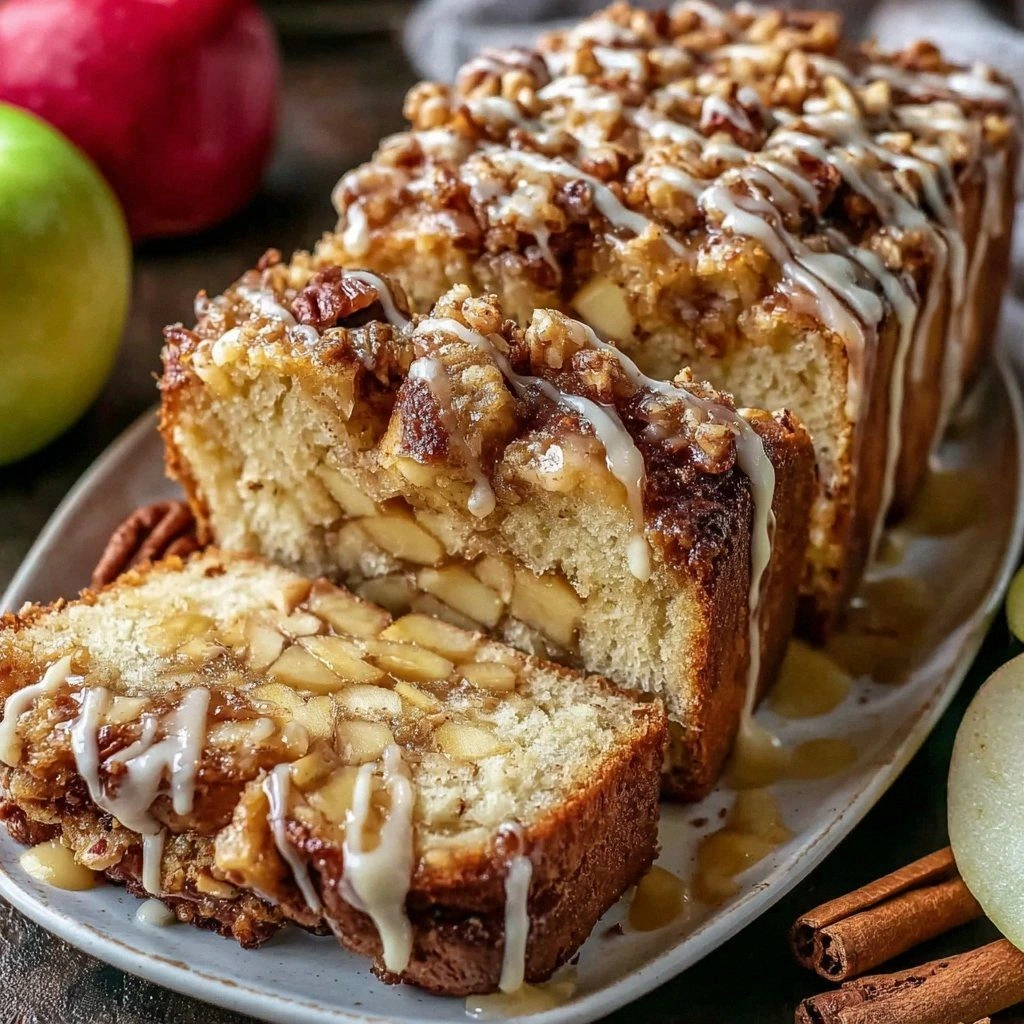
Picture this: a Saturday morning, the sun slants through the kitchen window, and your trusty oven is still warm from last night's dinner. You’re craving something sweet, yet comforting, that can double as a breakfast treat or a brunch side, and you know the answer is a loaf of bread that sings with apples and walnuts. I was on a mission to find the ultimate version of this, and after a few missteps—like that time I accidentally overbaked a batch and ended up with a crunchy, almost burnt crust—I discovered a recipe that flips the script. The secret? A subtle dance between flour, butter, and a splash of vanilla that lifts the dough into a light, airy texture while the apples stay juicy and the walnuts add a satisfying crunch.
The moment you crack the first egg, the kitchen fills with a warm, buttery aroma that feels like a hug. The apples, diced into bite‑sized cubes, release a sweet scent that mingles with the faint scent of cinnamon. When the batter hits the pan, you hear that satisfying sizzle—an instant promise of golden edges and a moist center. As the bread bakes, steam rises, filling the air with a sweet, nutty perfume that makes you close your eyes and imagine a crisp autumn afternoon. By the time the timer dings, your kitchen smells like a cozy bakery, and the loaf looks golden, with a slight sheen on top that invites you to slice into it.
What sets this version apart from every other recipe out there is that it balances the sweetness of apples with a subtle, earthy crunch of walnuts, all wrapped in a tender crumb that feels like a cloud. The batter is thick enough to hold its shape when poured into a skillet, yet it spreads just enough to create a flat, golden sheet that’s easy to slice. I dare you to taste this and not go back for seconds—once you experience the harmonious blend of textures and flavors, you’ll find yourself reaching for more. If you’ve ever struggled with a dense, heavy apple bread that feels like a brick, you’re not alone, and I’ve got the fix that will transform your loaf into a light, fluffy masterpiece.
Most recipes get this completely wrong by overmixing the batter or using too much flour, which turns the bread into a dry, rubbery mess. The trick here is to fold in the apples and walnuts gently after the wet ingredients are combined, preserving their moisture and crunch. I’ll be honest—when I first tried this recipe, I ate half the batch before anyone else got to try it, because the flavor was just that irresistible. Picture yourself pulling this out of the oven, the whole kitchen smelling incredible, and the loaf cooling on a rack, its surface glistening with a buttery sheen. The result? A loaf that’s hands down the best version you’ll ever make at home, with a crust that cracks like thin ice and a crumb that’s softer than a cloud.
Let me walk you through every single step—by the end, you’ll wonder how you ever made it any other way. From the moment you whisk the dry ingredients to the final drizzle of melted butter on the hot loaf, I’ll keep you side by side, sharing tips, jokes, and the occasional kitchen fail. This is more than a recipe; it’s a culinary adventure that will leave your taste buds dancing and your pantry smelling like home. So grab your apron, preheat that oven, and let’s dive into the magic of Apple Walnut Fritter Bread.
What Makes This Version Stand Out
Taste: The combination of tart apples, sweet sugar, and warm cinnamon creates a flavor profile that feels like a cozy fall afternoon, even in the middle of summer.
Texture: The batter’s thickness gives the loaf a sturdy yet tender crumb, while the walnuts add a satisfying crunch that contrasts beautifully with the soft interior.
Simplicity: With just eleven ingredients, this recipe is a breeze to assemble—no fancy equipment or obscure spices required.
Uniqueness: The fritter‑style shape allows the bread to cook evenly and develop a crisp, caramelized crust that’s rare in traditional loaf recipes.
Crowd Reaction: Friends who’ve tried this loaf rave about how it “breaks the mold” of ordinary apple bread—many have called it “the best thing I’ve ever had for brunch.”
Ingredient Quality: Using fresh, high‑quality apples and real butter elevates the flavor profile, turning a simple loaf into a gourmet experience.
Cooking Method: Baking the loaf in a skillet gives it a unique, flat shape that’s perfect for slicing into thick, buttery pieces.
Make‑Ahead Potential: The loaf can be frozen after baking, then reheated for a quick, fresh breakfast or snack on the go.
Alright, let's break down exactly what goes into this masterpiece…
Inside the Ingredient List
The Flavor Base
All-purpose flour: The backbone of your bread, providing structure and texture. It absorbs the butter and liquid, creating a sturdy crumb that holds the apples and walnuts. If you skip the flour, the loaf will collapse and become a sticky mess. For best results, sift the flour to aerate it and ensure even mixing.
Granulated sugar: Sweetens the bread and helps create that lovely golden crust. The sugar caramelizes as it bakes, giving the loaf a subtle caramel flavor. Too much sugar can cause the bread to brown too quickly; stick to the measured amount for perfect results. If you prefer a less sweet loaf, you can reduce the sugar by one‑third, but the texture may change slightly.
Unsalted butter: Adds richness and moisture; make sure it’s softened for easy mixing. Butter provides the fat that keeps the crumb tender and adds a buttery flavor that pairs beautifully with the apples. Using unsalted butter lets you control the salt level. If you’re short on butter, a neutral oil can be used, but the flavor will be less complex.
The Texture Crew
Large eggs: They bind the ingredients together and contribute to the bread’s fluffiness. Eggs add structure and help the loaf rise. Overbeating the eggs before adding them to the batter can make the loaf dense; whisk them just until the whites are set. If you’re vegan, you can substitute with flaxseed or chia eggs for a similar binding effect.
Diced apples: Fresh apples bring natural sweetness and moisture; I love using Granny Smith for a tart kick! The apples keep the loaf moist and add a fruity burst in every bite. If you prefer a sweeter apple, try Fuji or Honeycrisp. Keep the apple pieces small so they cook evenly and don’t sink to the bottom.
Chopped walnuts: These add a delightful crunch and nutty flavor; feel free to substitute with pecans if you prefer. Walnuts provide a deep, earthy taste that balances the sweetness of the apples. Roughly chop the walnuts to avoid a crunchy texture that’s too harsh. If you’re allergic, you can replace them with sunflower seeds or pumpkin seeds for a crunchy twist.
The Unexpected Star
Baking powder: This leavening agent helps the bread rise, making it light and airy. Baking powder reacts with the acidic apples, creating tiny bubbles that lift the loaf. If you’re using a single‑acting baking powder, add it just before baking to preserve its leavening power. A pinch of baking soda can help neutralize the acidity, but be careful not to overdo it.
Baking soda: Works alongside baking powder for extra lift; don’t skip it! Baking soda reacts with the apples’ natural acid, creating carbon dioxide that expands the dough. If you skip the soda, the loaf may be denser and less fluffy. If you’re sensitive to sodium, you can reduce the amount slightly.
The Final Flourish
Salt: Just a pinch enhances all the flavors in your bread. Salt balances the sweetness and brings out the natural flavors of the apples and walnuts. If you’re watching sodium, you can reduce it to a quarter of a teaspoon, but the loaf will still taste great. Don’t skip it entirely; even a tiny amount makes a big difference.
Cinnamon: This warm spice adds a cozy aroma and flavor that pairs perfectly with apples. Cinnamon’s subtle heat brings depth to the loaf, making it feel comforting. A dash of ground nutmeg can add a new layer of flavor, but keep it minimal to avoid overpowering the apples.
Vanilla extract: A splash of vanilla elevates the sweetness and adds depth to the flavor. Vanilla’s sweet, floral notes enhance the apple’s natural tartness. If you’re vegan, you can use a plant‑based vanilla or a splash of almond extract for a different twist.
Everything's prepped? Good. Let's get into the real action…
The Method — Step by Step
-
Preheat your oven to 375°F (190°C) and grease a 9×5-inch loaf pan or a cast‑iron skillet with butter. The pan should be clean and dry to prevent sticking. While the oven heats, bring a small saucepan to a gentle simmer to melt 1/4 cup of butter; this will be used later to glaze the loaf.
Watch Out: If the butter starts to brown too quickly, lower the heat; a browned butter will give a bitter taste to your bread.
-
In a large bowl, whisk together 2 cups of all‑purpose flour, 1 cup of granulated sugar, 1 tsp of baking powder, 1/2 tsp of baking soda, 1 tsp of cinnamon, and a pinch of salt. Sift the dry ingredients to ensure there are no lumps and that the leavening agents are evenly distributed. This mixture forms the backbone of our loaf.
Kitchen Hack: Use a whisk that’s long enough to reach the bottom of the bowl; this helps incorporate air, giving the loaf a lighter texture.
-
In a separate bowl, beat 2 large eggs with 1/2 cup of softened unsalted butter and 1 tsp of vanilla extract until the mixture is smooth and slightly thickened. The butter should be at room temperature so it blends seamlessly with the eggs, creating a silky batter. This wet mixture will carry the flavors of the apples and walnuts.
Power Transition: Okay, ready for the game‑changer? The eggs and butter together create a rich base that will keep the loaf moist.
-
Pour the wet mixture into the dry ingredients and stir with a silicone spatula until just combined. The batter should be slightly lumpy; over‑mixing will develop gluten and make the loaf tough. The moment you see the first streak of batter, you know you’re on the right track.
Watch Out: If the batter becomes too thick, add a splash of milk or water—just a tablespoon or two—to loosen it without making it runny.
-
Fold in 1 cup of diced apples and 1 cup of chopped walnuts gently, using a gentle “fold” motion with the spatula. This preserves the crunch of the walnuts and the juiciness of the apples. Be careful not to break the apples into a puree; the texture is part of the charm.
Kitchen Hack: Warm the apples slightly in a microwave for 10 seconds before folding them in; this helps them release moisture without becoming soggy.
-
Transfer the batter into the prepared pan, spreading it evenly with a spatula. The batter should fill the pan about 3/4 full to allow room for expansion. Tap the pan gently on the counter to release any large air pockets.
Power Transition: This next step is pure magic—watch as the batter rises and the edges start to pull away from the pan.
-
Slide the pan into the preheated oven and bake for 30 minutes, or until a toothpick inserted in the center comes out clean and the top is a deep golden brown. The batter should rise slightly and develop a crisp crust. Keep an eye on the color; if it browns too quickly, tent the loaf with foil.
Watch Out: Overbaking can dry out the apples; check the loaf at the 25‑minute mark to prevent this.
-
Once baked, remove the loaf from the oven and immediately drizzle the melted butter over the hot surface. The butter will soak into the top, creating a glossy, buttery finish that locks in moisture. Let the loaf rest in the pan for 5 minutes before transferring it to a wire rack.
Kitchen Hack: Use a pastry brush to spread the butter evenly, ensuring every corner gets a buttery coat.
-
Allow the loaf to cool completely before slicing. The crumb will set, making it easier to cut clean slices. Serve the bread warm or at room temperature, perhaps with a dollop of whipped cream or a drizzle of maple syrup for an extra indulgent touch. This loaf is perfect for breakfast, brunch, or a sweet snack any time of day.
Power Transition: And that’s it—you did it. But hold on, I've got a few more tricks that’ll take this to another level.
Insider Tricks for Flawless Results
The Temperature Rule Nobody Follows
Many bakers bake at the lowest possible temperature to avoid over‑browning, but this loaf benefits from a steady 375°F. The consistent heat allows the batter to rise evenly, creating a uniform crumb. If your oven runs hot, rotate the pan halfway through baking to ensure even cooking. I once baked at 400°F, and the loaf came out too dry—so keep that temperature steady.
Why Your Nose Knows Best
Trust your nose: when the loaf starts to smell like toasted bread with a hint of apple, it’s almost done. That aroma indicates the sugars are caramelizing, and the crust is forming. If the smell is too sweet, it may be overbaked. I always set a timer for 25 minutes and then check the scent to decide if I need to bake a bit longer.
The 5‑Minute Rest That Changes Everything
Letting the loaf rest for 5 minutes in the pan after baking is crucial. The residual heat continues to cook the interior, ensuring a moist crumb. It also allows the butter glaze to set, preventing it from sliding off when you slice. I’ve seen loaf slices slide off the knife because they were too hot—this rest fixes that.
Avoiding the Sticky Mess
If your batter becomes too sticky, it’s often because the apples released too much juice. To counter this, toast the walnut pieces in a dry skillet for a couple of minutes before folding them in; this dries them slightly and adds a nutty flavor. You can also add a tablespoon of flour to the batter to absorb excess moisture.
The Secret to a Crispy Edge
For a crispier edge, brush the top of the loaf with a thin layer of melted butter about 5 minutes before the end of baking. This extra butter coating caramelizes and creates a golden crust. I’ve used this trick on other loaves, and it always delivers that satisfying crunch.
The Final Glaze Twist
After the loaf cools, drizzle a light glaze of honey and cinnamon over the top. This adds a sweet, aromatic finish that complements the apples. The glaze also gives the loaf a glossy appearance that’s Instagram‑ready. I recommend letting the glaze set for a minute before slicing.
Creative Twists and Variations
This recipe is a playground. Here are some of my favorite ways to switch things up:
Caramel Apple Walnut Fritter
Swap the granulated sugar for brown sugar and add a tablespoon of caramel sauce to the batter. The caramel deepens the sweetness and gives the loaf a rich, buttery flavor. Serve with a scoop of vanilla ice cream for a dessert‑like experience.
Chocolate Chip Apple Walnut Fritter
Fold in 1/2 cup of semi‑sweet chocolate chips with the apples and walnuts. The chocolate adds a decadent twist that pairs wonderfully with the apple’s tartness. This version is perfect for chocolate lovers who want a sweet, nutty loaf.
Spiced Pumpkin Walnut Fritter
Replace the apples with 1 cup of pumpkin puree and add 1/2 tsp of pumpkin pie spice. The pumpkin gives a smooth, velvety texture, while the spice adds warmth. This variation is ideal for a cozy autumn breakfast.
Gluten‑Free Apple Walnut Fritter
Use a gluten‑free all‑purpose blend in place of the regular flour, and add 1 tsp of xanthan gum to maintain structure. The loaf will still rise and stay moist, but the crumb will have a slightly different texture. This version is great for gluten‑sensitive diners.
Vegan Apple Walnut Fritter
Replace the eggs with 1/4 cup of unsweetened applesauce and the butter with melted coconut oil. The batter will still rise, and the coconut oil adds a subtle tropical flavor. This loaf is a delightful vegan treat that still feels indulgent.
Apple Walnut Fritter with a Citrus Twist
Add the zest of one orange and a splash of orange juice to the batter. The citrus brightens the flavor profile and adds a refreshing note. This variation is perfect for spring or summer mornings.
Storing and Bringing It Back to Life
Fridge Storage
Store the cooled loaf in an airtight container or wrap it tightly in plastic wrap for up to 3 days. The loaf stays moist and flavorful when kept at room temperature for short periods, but refrigeration prevents mold growth. When you’re ready to enjoy it, let it sit at room temperature for 20 minutes to regain its softness.
Freezer Friendly
Wrap the loaf tightly in aluminum foil and then place it in a freezer bag. It can be stored for up to 2 months without losing quality. When you’re ready to eat, thaw it in the refrigerator overnight and then warm it in a 350°F oven for 10 minutes to revive its golden crust.
Best Reheating Method
To bring the loaf back to life, place it in a preheated oven at 350°F for 5–7 minutes. Add a tiny splash of water to the bottom of the pan to create steam, which helps the loaf stay moist. For a crispier crust, remove the foil during the last minute of reheating. Serve warm with a dollop of whipped cream or a drizzle of maple syrup.