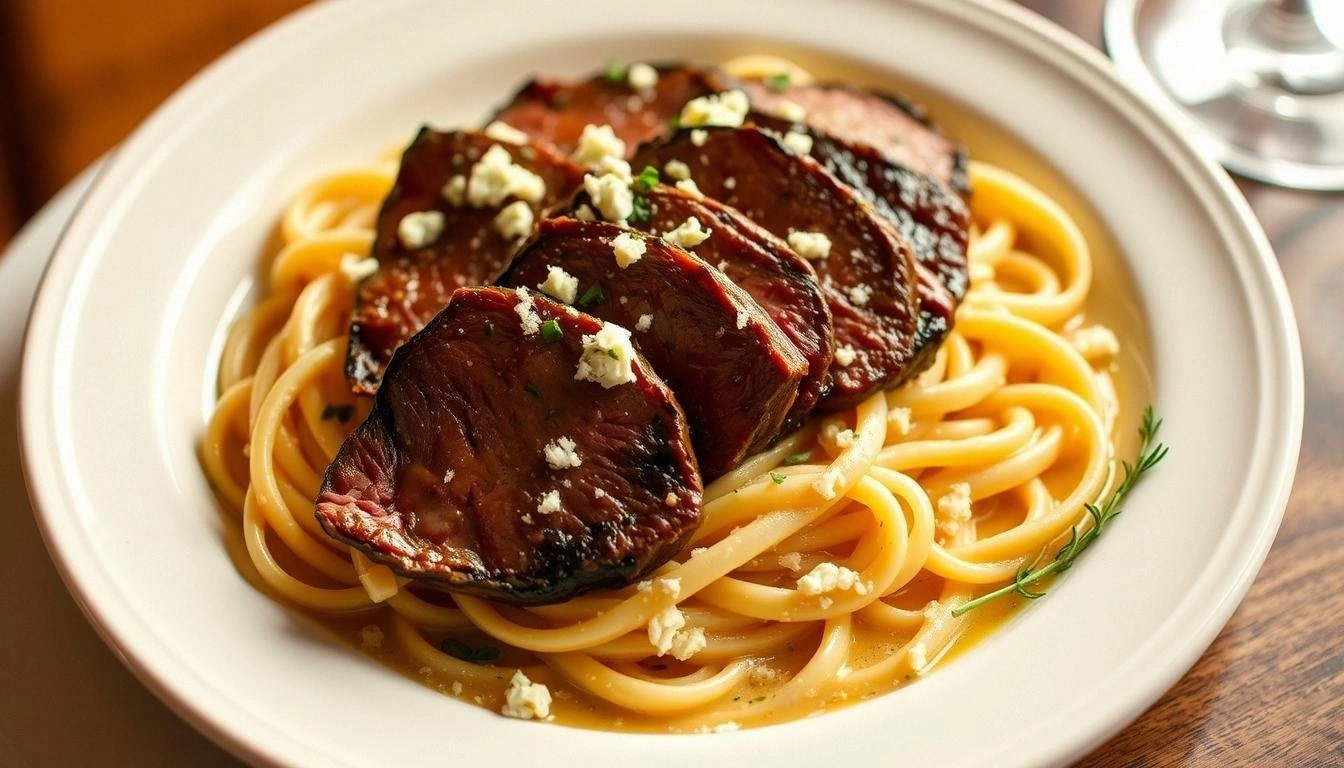
Picture this: you’re standing in a kitchen that smells like a summer barbecue and a creamy Italian trattoria all at once, and your friend dares you to make the ultimate steak Alfredo that will leave everyone begging for seconds. I’ve been chasing that perfect blend of smoky, buttery steak and velvety, tangy Gorgonzola sauce for months, and the moment I finally nailed it, I knew I had to share. This isn’t just another pasta recipe; it’s a culinary high‑five that brings together the richness of a seared ribeye and the bold flavor of Gorgonzola, all smothered in a sauce that coats each strand of fettuccine like velvet. The moment the steak sizzles, the air fills with a caramelized aroma that makes you forget you’re in a kitchen and you’re at a five‑star restaurant. I dare you to taste this and not go back for seconds.
When I first tried to recreate a restaurant‑style steak Alfredo at home, I was hit with a wall of disappointment: the sauce was too thin, the steak was dry, and the pasta was gummy. I spent hours researching, testing, and tweaking until I found the perfect balance of ingredients and techniques that turned the dish into a crowd‑pleaser. The sauce is thick, but not heavy; the steak is juicy with a crisp, caramelized crust; the pasta is al dente, soaking up every drop of sauce without becoming soggy. Every bite feels like a hug, and the finish is a subtle, lingering tang from the Gorgonzola that lingers on the palate. If you’ve ever struggled to make a creamy, flavorful steak Alfredo, you’re not alone — and I’ve got the fix.
What makes this version stand out is not just the ingredients, but the method: a quick sear, a deglaze that pulls all those savory bits into the sauce, and a careful balance of cream and cheeses that creates a silky, decadent coating. I’ve distilled the process into a series of micro‑challenges that keep your hands busy and your taste buds excited. The result? A dish that’s hands down the best version you’ll ever make at home, with a sauce that clings to the pasta like a second skin. Picture yourself pulling this out of the oven, the whole kitchen smelling incredible, and the table already filling up with eager mouths. Stay with me here — this is worth it.
Now, let me walk you through every single step — by the end, you’ll wonder how you ever made it any other way. I’ll share the exact quantities, the precise timing, and the little secrets that elevate the dish from good to unforgettable. Whether you’re cooking for a crowd or a cozy night in, this recipe will become your go‑to go‑to for a comforting, luxurious meal. Let’s dive in and turn your kitchen into a Michelin‑star experience.
What Makes This Version Stand Out
- Bold Flavor: The combination of Gorgonzola and Parmesan creates a rich, complex profile that’s both sharp and creamy, unlike the milder cheeses used in most recipes.
- Texture Mastery: A perfectly seared steak offers a caramelized crust that contrasts with the silky sauce, delivering a satisfying bite every time.
- Ingredient Quality: Fresh, high‑grade steak and cheeses make a world of difference, turning an ordinary dish into a gourmet experience.
- Simplicity: With only 15 minutes of prep and 30 minutes of cooking, you can achieve restaurant quality without the time‑consuming steps of traditional alfredo.
- Crowd‑Pleaser: The bold flavors and luxurious sauce make it a hit at dinner parties, impressing guests with minimal effort.
- Make‑Ahead Potential: The sauce can be prepared a day ahead, and the steak can be grilled and refrigerated, making it perfect for busy evenings.
- Versatility: Swap the steak for shrimp or chicken, and the dish becomes an entirely different meal while retaining its signature sauce.
- Visual Appeal: The glossy sauce and seared steak create an Instagram‑ready plate that’s as beautiful as it is delicious.
Inside the Ingredient List
The Flavor Base
Olive Oil: A tablespoon of extra‑virgin olive oil is the first thing that gets heated in the pan, providing a subtle fruity note that balances the richness of the steak. It also prevents the steak from sticking, ensuring a perfect sear. Skipping it would result in a greasy, uneven crust. A good quality oil with a high smoke point is ideal, but the extra flavor from a refined olive oil is a bonus.
Salt & Pepper: The steak needs a generous sprinkle of kosher salt and freshly ground pepper to form a savory crust. Salt draws out moisture, creating a caramelized surface, while pepper adds a mild heat that complements the cheeses. If you’re watching sodium, use a low‑sodium salt, but don’t compromise on the pepper; it’s essential for flavor depth.
The Texture Crew
Steak: A 1‑inch thick ribeye offers the perfect balance of marbling and tenderness. The fat melts into the meat during searing, keeping it juicy and flavorful. If you prefer a leaner cut, consider a sirloin, but be mindful that it may dry out if overcooked. The key is to let the steak rest after cooking to redistribute juices.
Garlic: Two minced cloves of garlic add a punch of aroma that permeates the sauce. Garlic is sautéed with butter to create a fragrant base, and its subtle sweetness balances the sharpness of Gorgonzola. If you’re not a fan of raw garlic, lightly sauté it until golden before adding the rest of the sauce.
The Unexpected Star
Gorgonzola Cheese: This blue cheese is the star that gives the sauce its distinctive tang and depth. Its creamy texture melts beautifully into the sauce, creating a silky coating that clings to the pasta. If you can’t find Gorgonzola, a blend of blue cheese and feta can mimic the flavor, but the original will always win.
Heavy Cream: Cream is the backbone of the sauce, providing richness without being too heavy. It’s the vehicle that carries the cheeses and garlic, giving the sauce a luscious mouthfeel. Use a 30% fat cream for the best balance of creaminess and stability.
The Final Flourish
Parmesan Cheese: A cup of grated Parmesan adds a nutty, umami finish that rounds out the sauce. It also helps thicken the sauce slightly, giving it that glossy coat. If you’re lactose intolerant, a dairy‑free Parmesan alternative works, but the texture will differ.
Lemon Juice: A tablespoon of fresh lemon juice brightens the sauce, cutting through the richness with a citrusy zing. It also prevents the cheeses from becoming too thick. If you don’t have fresh lemons, a splash of white wine vinegar can substitute.
Fresh Thyme: A teaspoon of thyme adds an herbal note that complements the steak’s flavor. Thyme’s subtle earthiness balances the sharpness of the cheeses, creating a harmonious taste profile. If thyme isn’t available, oregano or rosemary can be used sparingly.
Everything’s prepped? Good. Let’s get into the real action.
The Method — Step by Step
- Season the ribeye steaks generously with salt and pepper on both sides. Let them sit at room temperature for 15 minutes; this helps them cook evenly. The steak should be at least 1 inch thick for a perfect sear. This step is crucial for flavor and texture.
- Heat a large cast‑iron skillet over medium‑high heat until it’s shimmering. Add the tablespoon of olive oil, swirling to coat. Once the oil starts to smoke lightly, place the steaks in the pan. Watch the sizzle; that’s the sound of flavor.
- Sear the steaks for 4–5 minutes on each side, depending on thickness, until a dark crust forms. Flip only once to preserve the juices. Use tongs to avoid piercing the meat. The goal is a caramelized exterior, not a burnt one.
- Transfer the skillet to a preheated oven at 400°F (200°C) and roast the steaks for 4–6 minutes for medium‑rare. Check the internal temperature with a meat thermometer; it should read 130°F (54°C). If you prefer medium, roast an extra minute or two.
- While the steak rests, remove it from the pan and cover loosely with foil to keep warm. The residual heat will continue to cook the meat slightly. Let it rest for 5 minutes; this prevents juices from spilling out when sliced.
- In the same pan, add 2 tablespoons of butter and let it melt. Stir in the minced garlic and cook until fragrant, about 30 seconds. Be careful not to burn the garlic; it should be golden, not brown.
- Deglaze the pan with 1/2 cup of dry white wine, scraping up all the browned bits. Let the wine reduce by half, concentrating the flavor. This step adds depth to the sauce and lifts the caramelized bits into the liquid.
- Add the heavy cream to the pan and bring to a gentle simmer. Stir in the grated Gorgonzola and Parmesan cheeses, whisking until the sauce is smooth and glossy. The cheeses should melt completely, creating a thick, velvety coating.
- Season the sauce with a tablespoon of lemon juice and a teaspoon of fresh thyme. Adjust the seasoning with salt and pepper to taste. The lemon brightens the sauce, preventing it from feeling too heavy.
- Cook the fettuccine in a large pot of salted boiling water until al dente, about 10–12 minutes. Reserve a cup of pasta water before draining. Toss the pasta in the sauce, adding reserved water as needed to achieve a silky coating.
- Slice the rested steak against the grain into thin strips. Arrange the steak on top of the pasta, then sprinkle chopped parsley for a fresh finish. Serve immediately, ensuring each bite has both steak and sauce.
That’s it — you did it. But hold on, I’ve got a few more tricks that’ll take this to another level.
Insider Tricks for Flawless Results
The Temperature Rule Nobody Follows
Many cooks assume that a steak will be perfectly cooked by the time it hits the pan. In reality, the internal temperature rises even after it’s removed. By resting the steak for 5 minutes, you allow the heat to distribute evenly, ensuring a juicy center. I once served a steak that was still pink on the inside; the rest period saved the day.
Why Your Nose Knows Best
Your sense of smell is a secret weapon in cooking. When the sauce starts to thicken, the aroma of melted Gorgonzola should smell rich and slightly nutty. If it smells sour or overly sharp, it’s time to add more cream or a pinch of sugar to balance the acidity. Trust your nose; it’s your best judge of flavor.
The 5-Minute Rest That Changes Everything
Resting the steak is often overlooked, but it’s the difference between a dry, tough piece and a tender, juicy slice. The muscle fibers relax, allowing the juices to redistribute. If you skip this step, you’ll end up with a steak that feels like rubber. I’ve seen people forget this, and it’s a rookie mistake.
The Right Pan for the Job
A heavy‑bottomed pan, like cast iron or stainless steel, ensures even heat distribution. It prevents hot spots that can burn the steak or sauce. If you’re using a non‑stick pan, be careful not to overheat; the coating can degrade and affect flavor.
The Pasta‑Sauce Bond
Adding a splash of pasta water to the sauce is a classic technique that helps the sauce cling to the noodles. The starch in the water acts as an adhesive, creating a silky coating. If the sauce seems too thick, simply stir in a bit more water until it’s glossy and smooth.
The Final Touch of Freshness
A handful of chopped parsley or a sprinkle of fresh basil adds a burst of color and a fresh flavor that cuts through the richness. It also provides a visual contrast that makes the dish feel lighter. Don’t be shy; a little herb goes a long way.
Creative Twists and Variations
This recipe is a playground. Here are some of my favorite ways to switch things up:
Spicy Cajun Steak
Add a pinch of cayenne pepper to the steak seasoning and a dash of Cajun spice to the sauce. The heat pairs beautifully with the creamy Gorgonzola, creating a bold, spicy flavor profile that’s perfect for summer gatherings.
Mushroom Medley
Sauté sliced mushrooms in the butter before adding the garlic. Their earthy aroma enhances the sauce, while their texture adds a satisfying bite. This variation is ideal for a cozy, autumnal dinner.
Chicken Alfredo Twist
Replace the ribeye with grilled chicken breast for a lighter option. The chicken’s mild flavor lets the sauce shine, and the dish becomes a great choice for a quick weekday meal.
Pesto Gorgonzola Fusion
Stir in a tablespoon of basil pesto into the sauce after the cheeses have melted. The herbal freshness balances the richness, creating a layered flavor that feels both familiar and new.
Vegetarian Version
Use a thick slice of seared portobello mushroom as a steak substitute. The mushroom’s meaty texture and umami flavor pair wonderfully with the Gorgonzola sauce, making it a satisfying meatless meal.
Breakfast Alfredo
Add a few scrambled eggs to the pasta before serving. The eggs add protein and a silky texture, turning the dish into a hearty breakfast or brunch option.
Storing and Bringing It Back to Life
Fridge Storage
Store the sauce in an airtight container in the refrigerator for up to 3 days. Keep the pasta separate until you’re ready to serve to prevent it from becoming mushy. Reheat gently on the stove, adding a splash of cream if needed.
Freezer Friendly
The sauce freezes well for up to 2 weeks. Thaw overnight in the refrigerator and reheat on low heat, stirring frequently. The steak can be grilled and stored separately, then reheated in a skillet.
Best Reheating Method
Reheat the sauce on low heat, whisking continuously to prevent separation. Add a tiny splash of water or milk to restore creaminess. The pasta should be added last, warming it quickly to avoid overcooking.